

Stories
Research Update: 8 October 2026
October 8, 2026
 The weekly Research Update contains the latest news, journal articles, and useful links from around the web. Some of this week's topics include:
● A Qualitative Preliminary Study of Ukrainian Healthcare Providers' Perspectives on Service Member's Mental Health Since the Russian Invasion.
● National trends in mental health outcomes among U.S. combat veterans by war era.
● Post-traumatic stress disorder (PTSD) in war: a comprehensive review of subtypes, risk and protective factors, and therapeutic approaches.
● Telehealth and Hybrid Service Use for Major Depression and Substance Use Disorders Among U.S. Adults, 2022–2023.
CLICK HERE TO READ THE 8 OCTOBER 2026 RESEARCH UPDATE
Staff Perspective: Escaping the Thinking Traps that Drive Daily Stress
October 7, 2026
 By Aditi Venkatesh, M.S.
Most of us have negative, irrational thoughts from time to time. If we assume that these thoughts are logical or true, they can shape how we see the world, how we feel, and even how we behave. In my own clinical work, I see how easy it is for patients I work with to fall into these mental loops without even realizing it. Such thoughts are normal occasionally; however, they can become harmful when they are more frequent or are higher in intensity. Clinically, we call these thoughts cognitive distortions, but I prefer to think of them simply as “thinking traps.”
From an evolutionary perspective, these thinking traps are not personal flaws but adaptive survival mechanisms that have gone into overdrive. In high-stakes environments, being hypervigilant and preparing for worst-case scenarios can be helpful in surviving. However, when these survival-based thinking traps are present in daily life, they can become rigid patterns, potentially misinterpreting low-stress situations as high-stress or threatening situations.
For active-duty service members and veterans, navigating unique occupational stressors, unpredictable schedules, and transitions can increase levels of stress. Studies consistently show that elevated stress and anxiety go hand-in-hand with an increase in thinking traps, and it works both ways. This is critical to keep in mind, especially given that over 10% of active-duty service members and 20% of veterans navigate mental health challenges.
Therefore, identifying these thinking traps and learning how to manage them are some of the most important tools we have for protecting our patient’s and our own overall mental well-being.
Spotting Common Thinking Traps in Everyday Life: The Beck Institute identifies several thinking traps that tend to surface when running on low battery or high stress. Here are few of the thinking traps I see most often:
- All-or-nothing thinking: Viewing situations in black-and-white terms without any gray. (Example: “If I don’t execute this task perfectly, all of it is a complete failure.”)
- Catastrophizing: Predicting the worst possible outcome without considering realistic probabilities. (Example: “If I make a mistake during my presentation, my leaders and peers will lose all respect for me.”)
- Disqualifying or discounting the positive: Rejecting positive experiences or successes. (Example: “I excelled on my evaluation, but it was just luck.”)
- Mind reading: Believing you know what others are thinking without any evidence. (Example: “My commander didn’t say hello to me as we passed by each other, so he’s certainly angry with me.”)
- ‘Should’ and ‘must’ statements: Operating with rigid rules for how you, others, or the world must be. (Example: “I should be able to handle all this stress without feeling exhausted.”)
When these thinking traps go unchecked, we can easily get stuck in negative feedback loops that drive up anxiety, stress, burnout, and depression.
Using CBT Techniques to Take Back Control: In cognitive-behavioral therapy (CBT), a modality of therapy developed by Dr. Aaron Beck and expanded by Dr. Judith Beck, our goal isn’t forced optimism or toxic positivity. Instead, we focus on training your brain to test automatic thoughts against reality. CBT is a structured, evidence-based framework that focuses not only on positive thinking, but three core steps: identifying, challenging, and restructuring cognitive distortions.
What this Looks Like when Working with Military Patients: Working with active-duty service members and veterans requires adapting standard CBT techniques to respect and incorporate military culture. Rather than framing a patient’s thoughts as simply “irrational,” I find it far more effective to start by validating that tools, such as catastrophizing, served a vital tactical purpose in operational environments. Following this validation with socratic questioning allows us to collaboratively evaluate whether those same thoughts are still serving them well in daily life as a military service member, veteran, or civilian. By challenging the thought and testing the evidence for their thinking traps, we can frame cognitive restructuring as a practical skill to improve their mental and physical well-being. I’ve seen this to be a way to help military patients manage their unhelpful thinking patterns without undermining their military experiences.
Ultimately, learning to identify and restructure thinking traps is about restoring control and overall mental well-being. For military service members, veterans, and those of us who support them, mastering these cognitive techniques can provide a sustainable and effective way to manage the irrational, automatic thoughts experienced.
Which of these thinking traps do you see yourself, or the military patients you work with, making the most?
The opinions in CDP Staff Perspective blogs are solely those of the author and do not necessarily reflect the opinion of the Uniformed Services University of the Health Science or the Department of War.
References
Beck, J. S. (2020). Cognitive behavior therapy: Basics and beyond. Guilford Publications.
Division, A. F. H. S. (2026). Diagnoses of mental health disorders among US active component service members, 2020-2024. MSMR, 32(12), 25-35.
Kline, A. C., Panza, K. E., Nichter, B., Tsai, J., Harpaz-Rotem, I., Norman, S. B., & Pietrzak, R. H. (2022). Mental health care use among US military veterans: Results from the 2019–2020 National Health and Resilience in Veterans Study. Psychiatric services, 73(6), 628-635.
Mercan, N., Bulut, M., & Yüksel, Ç. (2023). Investigation of the relatedness of cognitive distortions with emotional expression, anxiety, and depression. Current Psychology, 42(3), 2176-2185.
Shi, Y., Zhang, Y., & Lei, L. (2026). Unmasking mental distress: exploring the spectrum of cognitive distortions associated with symptoms of anxiety, depression, and suicidal ideation. Cognitive processing, 27(1), 227-238.
Shickel, B., Siegel, S., Heesacker, M., Benton, S., & Rashidi, P. (2020, October). Automatic detection and classification of cognitive distortions in mental health text. In 2020 IEEE 20th International Conference on Bioinformatics and Bioengineering (BIBE) (pp. 275-280). IEEE.
By the Numbers: 5 October 2026
October 5, 2026
19.7%
The percentage of "143,747 suicide decedents in National Violent Death Reporting System" from 2020-2023 who "were reported to have physical health problems as a precipitating circumstance for suicide," according to an article in the American Journal of Preventive Medicine -- Physical Health Conditions Among Suicide Decedents: National Violent Death Reporting System, U.S., 2020–2023.
Nearly one quarter of suicide decedents with physical health problems experienced chronic pain, and almost half had at least 1 chronic condition. Decedents with physical health problems were significantly older (x̄=63.3 vs x̄=42.9 years), more likely to have ever served in the military (26.1% vs 12.3%), less likely to have a mental health diagnosis (43.8% vs 50.5%), and more likely to have disclosed current suicidal thoughts or intent (22.6% vs 20.9%; p<0.001) than those without physical health problems.
Research Update: 1 October 2026
October 1, 2026
The weekly Research Update contains the latest news, journal articles, and useful links from around the web. Some of this week's topics include:
● The Military Child & Family Collaboratory: A Content Analysis of Collective Impact Actions for Youth Mental Health, Emotional, Development, and Behavioral Needs.
● U.S. Army Reserve and National Guard Soldiers’ Motivations for Joining the Military and Their Effects on Post-Deployment Mental Health.
● Suicide Prevention in the US Military: Assessing the Impact of the Brandon Act.
● U.S. Combat Medicine and Military Morale.
CLICK HERE TO READ THE 1 OCTOBER 2026 RESEARCH UPDATE
Staff Perspective - Safeguard Project Update: Bringing the Right Suicide Prevention and PTSD Support to Veterans
September 30, 2026
 By Jessica Soule, LCSW
Funded by the VA Office of Suicide Prevention, Safeguard Veterans is a one-year pilot research program designed to unite community partners—including 13 key collaborators operating across six target cities—to strengthen the existing web of care surrounding our veterans. The Consortium for Defense Psychology (CDP) plays a vital role in this effort by equipping community providers with evidence-based suicide prevention and trauma-focused training and creating a tailored referral tool that aims to ensure veterans receive top-tier care, no matter where they seek PTSD treatment.
A core pillar of CDP’s work focuses on direct clinical education. To date, Safeguard has reached over 400 attendees through free, virtual workshops centered on Cognitive Behavioral Therapy for Suicide Prevention (CBT-SP), Problem Solving Therapy for Suicide Prevention (PST-SP), and Safety Planning.
CDP’s PTSD training curriculum features an innovative twist: equipping clinicians to deliver Prolonged Exposure Therapy (PE) and Cognitive Processing Therapy (CPT) in both traditional outpatient therapy formats and massed (condensed) schedules. While PE and CPT are highly effective treatments, traditional weekly therapy sometimes poses significant hurdles—ranging from practical scheduling conflicts to the anticipatory anxiety of repeatedly confronting trauma over several months. The best treatments only work if clients can stick with them; by offering condensed delivery options, clinicians can dismantle these barriers and make life-changing trauma care far more accessible and manageable.
To complement virtual training offerings, CDP is delivering immersive in-person trainings across select pilot locations. Following a successful two-day CBT-SP workshop in Fayetteville, NC, and a three-day Prolonged Exposure (PE) workshop in San Antonio, TX, there is still time to sign up for two final in-person trainings:
- Problem Solving Therapy for Suicide Prevention: Las Vegas, NV, 20-21 October 2026
- Cognitive Processing Therapy (CPT): Hampton, VA, 27-29 October 2026
Beyond provider education, CDP is finalizing an online referral tool designed for veterans, their families and caregivers, and community clinicians. Grounded in VA standards of care and refined through target user focus groups, the tool helps users navigate PTSD treatment programs outside the VA system. This ensures veterans who seek care in their local communities receive high-quality, culturally responsive treatment. As Safeguard’s training calendar culminates at the end of October, visit safeguardveterans.net to learn more or register for remaining trainings.
The opinions in CDP Staff Perspective blogs are solely those of the author and do not necessarily reflect the opinion of the Uniformed Services University of the Health Science or the Department of War.
By the Numbers: 28 September 2026
September 28, 2026
$119 billion
The "(t)otal annual cost of morbidity-related productivity losses attributable to" major depressive disorder among U.S. adults, according to an article in the American Journal of Preventive Medicine -- Morbidity-related productivity losses from major depressive disorder among U.S. adults. This equates to $5,824 "per affected adult in 2024."
Inability to work costs accounted for 44% of total productivity losses, followed by presenteeism (33%), absenteeism (18%), and household productivity loss (5%). Total productivity loss costs and per-person loss costs differed by sex.
Research Update: 24 September 2026
September 24, 2026
The weekly Research Update contains the latest news, journal articles, and useful links from around the web. Some of this week's topics include:
● Family Composition as a Moderator of PTSD and Suicidal Ideation-Related Risk for Non-Secure Firearm Storage Among U.S. Army Soldiers and Veterans.
● Prior Sexual Violence, PTSD Symptoms, and Recovery Trajectories After New Trauma.
● Mapping Clinical Diagnoses Associated With Neurodiversity and Neurodivergence in Mental Health Research: A Scoping Review.
● JAMA Insights: Psilocybin
CLICK HERE TO READ THE 24 SEPTEMBER 2026 RESEARCH UPDATE
Staff Perspective: The Power of Connection in Suicide Prevention
September 23, 2026
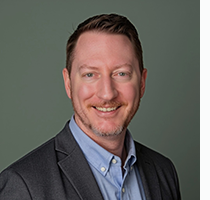 By David Obergfell, DSW, LCSW, BCD, DAAETS
I have sat across from people in the deepest reaches of their pain. I have lost colleagues, supervisees, and clients to suicide across a career that spans more than twenty-five years in mental and behavioral health. And I have experienced suicide loss personally, within my own family.
None of that makes me an expert on death. But it has given me a particular kind of education on what helps people stay alive, and what the research, increasingly, confirms: connection is not a complement to suicide prevention; it may be its most powerful upstream force.
What Suicide Is Really About
Researcher and clinical psychologist Dr. Thomas Joiner's interpersonal theory of suicide remains one of the most empirically supported frameworks we have. In short: people become most vulnerable to suicide when two painful beliefs converge. The perceived beliefs of “I am a burden to those around me” and “I do not belong anywhere.” Thwarted belonging and perceived burdensomeness. Disconnection from others and from one's sense of worth within a community.
These are not primarily psychiatric diagnoses. They are relational wounds.
Dr. Craig Bryan, whose work at The Ohio State University and across military and veteran populations spans more than 300 published studies and the influential book Rethinking Suicide, has further articulated how suicide risk is not a fixed trait but a dynamic state, shaped profoundly by the quality and felt safety of a person's social environment and real-time circumstances. Both frameworks suggest something most of us already know from lived experience: when a person feels genuinely seen, genuinely needed, and genuinely part of something, the calculus changes.
A Cultural Reflection for Consideration
Here I want to offer a thought, not a settled argument, but an invitation into reflection.
Anthropologist Edward Hall distinguished between high-context and low-context cultures. High-context cultures communicate meaning through relationships, shared history, and collective identity. What goes unsaid is understood because community provides the context. Low-context cultures rely more on explicit, individualized communication; meaning must be stated because shared context cannot be assumed.
Most Western industrialized societies, and the United States in particular, skew decidedly low context. We value independence, self-reliance, and individual achievement. These are genuine strengths. But, unrealized by an individual, they can carry a cost in the domain of mental health.
In a cultural context where self-sufficiency is the standard, struggle reads as failure. Needing others signals weakness. Asking for help means imposing a burden. The implicit message becomes, "You should be able to handle this yourself."
For someone already in the grip of perceived burdensomeness and thwarted belonging, whose internal experience is already whispering, “I am too much and not enough,” a culture that quietly confirms those messages is not a neutral backdrop but can be an accelerant.
The protective factors that appear most consistently in the research are belonging, shared meaning, community accountability, and knowing others would notice your absence. They exist, or fail to exist, in how we organize our relationships, our neighborhoods, and our institutions. This seems worth sitting with, especially for looking at human-centered design in prevention.
What Connection?
When I say connection is an antidote to suicide, I mean something layered.
Connection to self, the capacity to turn toward one's own emotional experience rather than away from it. Healing often shows up here first: someone notices joy again, or grief, or even simple physical hunger. Any signal from the body that says I am still here and something matters.
Connection to others, the experience of being known, imperfect and still chosen. Of having someone who notices when you go quiet and says something. Of mutual accountability that carries a person when they cannot carry themselves.
Connection to meaning, a sense that one's presence has consequences. That something, or someone, is worth staying for. Connection to possibility, the ability to imagine a future self, to believe that current pain is not the permanent shape of things. Hope, in its most honest form, is a connective tissue.
What Evidence Tells Us
One of the more compelling examples in recent prevention science is the Wingman-Connect program, developed for U.S. Air Force personnel and now expanded as Core Connections for law enforcement, healthcare, and community organizations. Rather than focusing on identifying and treating at-risk individuals, the program trains small units to strengthen cohesion, shared purpose, and collective skills to navigate challenges together.
Published in JAMA Network Open, the results showed significant reductions in suicidal ideation, depression, and occupational problems. A follow-up network analysis found that at-risk Airmen in trained units were far less likely to become isolated and saw an average 53% gain in valued peer connections, even though the program never explicitly targeted at-risk individuals. Protection emerged from the community itself.
Dr. Peter Wyman, the program's lead researcher, noted that suicide-preventive coping skills are most often learned from close-knit peers. The implication is quietly radical: build the community first, and the protection follows. This is upstream prevention, not the absence of treatment, but the presence of conditions that make crisis less likely in the first place.
What We Can Do Together
Prevention begins before crisis. It begins with the daily habits of how we show up for each other.
Notice and name. The most protective thing a person can offer someone they care about is to acknowledge their presence and ask, genuinely, with time to wait for the answer.
Reduce the cost of struggling. In communities where failure is treated as information rather than character, people stay visible longer. They don't have to disappear to be safe.
Build accountable relationships, not just supportive ones. Support implies direction. Accountability is mutual. Someone who knows you will notice your absence is different from someone available if you reach out.
Examine your community's norms. What does it mean, in your workplace, your unit, your family, to need help? What happens to people who say so? The answers tell you a great deal about the upstream conditions you are living in.
Human beings change throughout life. We are not fixed. The circumstances that generate despair are not permanent, even when they feel that way. And the research is consistent: that connection to self, to others, to meaning, to possibility is among the most powerful forces we have for keeping each other here.
If you are reading this and it feels personal, know you are not a burden. The people around you would feel your absence. If you are struggling right now, please reach out to someone you trust or one of the resources below. We do this better together.
The opinions in CDP Staff Perspective blogs are solely those of the author and do not necessarily reflect the opinion of the Uniformed Services University of the Health Science or the Department of War.
David Obergfell, DSW, LCSW, BCD, DAAETS, is a Military Mental Health Social Worker and Subject Matter Expert with the Consortium for Defense Psychology (CDP) at the Uniformed Services University of the Health Sciences in Bethesda, Maryland. In this capacity, he supports military behavioral health faculty on assignments and bandwidth across the center, providing professional development and performance management
Resources
Crisis Support
- 988 Suicide & Crisis Lifeline: Call or text 988, 24/7; chat available online
- Crisis Text Line: Text HOME to 741741
- Veterans Crisis Line: Call 988, press 1; text 838255
Research & Frameworks
- Joiner's Interpersonal Theory of Suicide, Overview
- Craig Bryan, Psy.D., Rivet Lab, Ohio State University, research on suicide prevention, crisis response, and military populations
- Rethinking Suicide by Craig J. Bryan
Upstream & Community Prevention
- Core Connections / Wingman Connect, SafeSide Prevention, evidence-based peer cohesion model
- Effect of the Wingman-Connect Upstream Suicide Prevention Program for Air Force Personnel in Training: A Cluster Randomized Clinical Trial
- Zero Suicide Institute, system-level framework for healthcare and organizational settings
- American Foundation for Suicide Prevention, education, advocacy, and survivor resource
By the Numbers: 21 September 2026
September 21, 2026
64%
The percentage of construction workers who "reported experiencing anxiety or depression in the previous 12 months, substantially higher than the 30% rate reported among US adults in general," according to an article in JAMA Health Forum -- Mental Health and Construction—Intervening to Prevent Collapse.
According to a 2023 National Vital Statistics Report, the construction and extraction industry experienced the highest drug overdose death rates (162.6 deaths per 100 000 workers) in the US, approximately 7 times higher than the general population (23.1 deaths per 100 000 standard population), and significantly higher than other industries involving manual labor, such as grounds cleaning and maintenance (70.0 deaths per 100 000 workers); farming, fishing, and forestry (51.3 deaths per 100 000 workers); food preparation and service (117.9 deaths per 100 000 workers); installation, maintenance, and repair (69.9 deaths per 100 000 workers); and transportation and material moving (70.7 deaths per 100 000 workers).
Research Update: 17 September 2026
September 17, 2026
The weekly Research Update contains the latest news, journal articles, and useful links from around the web. Some of this week's topics include:
● Sleep Health Is Not Optional, It's Operational: Introducing the Biopsychosocial Model of Sleep Deprivation on Warfighter Readiness.
● National trends in mental health outcomes among U.S. combat veterans by war era.
● Extreme Risk Protection Orders Among Military Service Members and Veterans.
● The prevalence and incidence of sleep disorder symptoms, correlates, and sex- stratified longitudinal associations with mental and menstrual health outcomes in UK Service Personnel: a prospective survey-based cohort study protocol.
CLICK HERE TO READ THE 17 SEPTEMBER 2026 RESEARCH UPDATE