
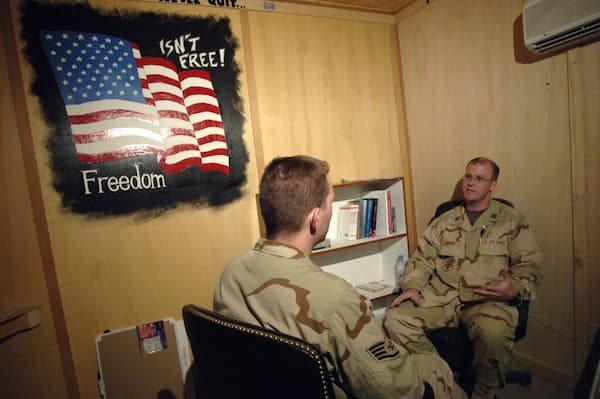
Military Culture Core Competencies for Health Care Professionals Self-Assessment and Introduction to Military Ethos
This course, sponsored by Department of Veterans Affairs and Department of Defense, aims to help you understand the role that military culture plays in the lives of those you serve. This course is comprised of four modules. In addition to this course module, other modules are Military Organization and Roles; Stressors and Resources; and Treatment Resources and Tools.
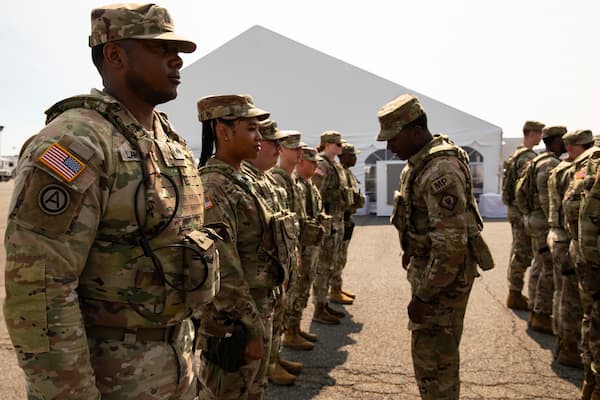
Military Culture: Core Competencies for Health Care Professionals Military Organization and Roles
The course opens with an overview of the differences between the explicit and implicit features of military culture and proceeds to describe the characteristics of implicit military culture. The next module identifies four sources of information about implicit military culture and describes six defining characteristics of warrior ethos. The learner is provided information about the influence of military guiding ideals and values on the lives of Servicemembers and Veterans. The final module offers an overview regarding the connotations of implicit military culture on the health care professional.
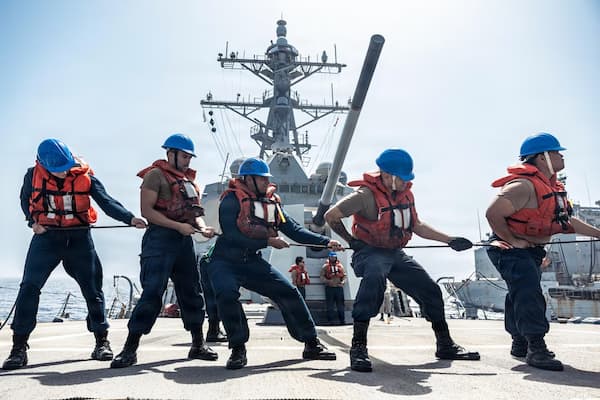
Military Culture: Core Competencies for Health Care Professionals Stressors and Resources
This course offers the learner an explanation on how stress can be either helpful or harmful depending on the nature of the provoking stressor and the availability of resources. The four phases of modern operational deployment cycles is presented in great detail in module 3. The next two modules describe the characteristic operational stressors and the spectrum of operational stress states and outcomes experienced by Servicemembers and their families during each deployment cycle phase.
Military Culture: Core Competencies for Health Care Professionals Treatment Resources and Tools
The final course in the military culture curriculum outlines the military culture impact on patient care and the health care professional’s role and explains the range of DoD and VA psychological health services. The course also provides information on interpreting military culture knowledge into patient assessment and treatment. Finally, the learner is exposed to the military culture implications of VA/DoD clinical practice guidelines relevant to the care of Servicemembers and Veterans and the strategies for identifying current military culture relevant patient and health care professional resources.
Prolonged Exposure (PE) Therapy for Service Members and Veterans: An Overview
Most individuals who have been exposed to a potentially traumatic event, such as sexual assault/abuse, physical assault/abuse, natural disasters, motor vehicle accidents, and combat, are able to recover naturally. Others, however, get “stuck” at some point during the recovery process and develop post-traumatic stress disorder (PTSD). Understanding how PTSD develops after a trauma and applying evidence-based treatment techniques to reduce or eliminate PTSD symptoms is critical area of competence for clinicians who serve trauma survivors. In this course, you will be introduced to one of the most effective treatments for individuals who have PTSD, called Prolonged Exposure therapy (PE).
Based on the work of Dr. Edna Foa and her colleagues, this course provides an overview of the the theoretical and empirical support for Prolonged Exposure therapy, and introduces the learner to the main treatment techniques used in PE.
Assessment and Treatment of Depression in Military Service: An Overview
This training module outlines the rates of depression in the civilian, military, and veteran population and provides information about the prevalence and etiology of depression. Information related to the stigma associated with depressive issues is addressed. Strategies for screening and assessing depression are included, and specific psychometric tools are provided. Treatments consistent with the VA/DoD Clinical Practice Guidelines to address depression are provided, with emphasis given to Cognitive and Behavioral Therapy. Finally, a brief overview of the six VA/DoD recommended treatment protocols is discussed, with information and resources for obtaining more comprehensive knowledge and training
Military Culture: Enhancing Clinical Competence
This training module is for civilian mental health providers who want to develop a better understanding about how the military works and who comprises the armed forces. It provides an overview of military culture to include basics about its history, organizational structure, core values, branches of the service, mission, and operations, as well as the differences between the active and reserve components. Participants acquire greater competency in working with Service members by learning military culture and terminology, and by discussing how aspects of the military culture impact behaviors and perspectives.
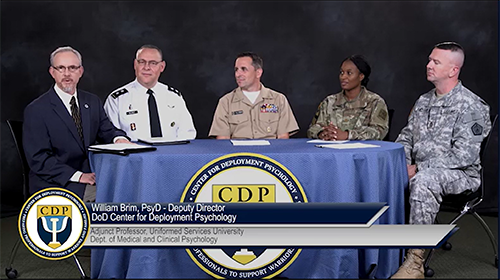
Military Culture in the Reserves and National Guard Course
The purpose of this knowledge-based educational web course is to close the gap by discussing the Reserve Component (RC) as a unique culture within the military culture that warrants awareness and understanding from health care providers. A panel of experts from various backgrounds and settings to include Guard and Reserve, officer and enlisted, line and healthcare personnel will orient learners to the basics of service in the RC and then provide a more in-depth discussion regarding how membership in the RC culture can affect the health care seeking and response of RC Service members and their families. Unique stressors of RC will be reviewed to include common deployment-related health and mental health concerns. Empirically supported strategies to best engage RC patients will be reviewed as well as expert opinions from providers with extensive experience in working with this population in a healthcare setting.
| Course | Type | Description |
|---|---|---|
|
This course, sponsored by Department of Veterans Affairs and Department of Defense, aims to help you understand the role that military culture plays in the lives of those you serve. This course is comprised of four modules. In addition to this course module, other modules are Military Organization and Roles; Stressors and Resources; and Treatment Resources and Tools. |
||
|
The course opens with an overview of the differences between the explicit and implicit features of military culture and proceeds to describe the characteristics of implicit military culture. The next module identifies four sources of information about implicit military culture and describes six defining characteristics of warrior ethos. The learner is provided information about the influence of military guiding ideals and values on the lives of Servicemembers and Veterans. The final module offers an overview regarding the connotations of implicit military culture on the health care professional. |
||
|
This course offers the learner an explanation on how stress can be either helpful or harmful depending on the nature of the provoking stressor and the availability of resources. The four phases of modern operational deployment cycles is presented in great detail in module 3. The next two modules describe the characteristic operational stressors and the spectrum of operational stress states and outcomes experienced by Servicemembers and their families during each deployment cycle phase. |
||
|
The final course in the military culture curriculum outlines the military culture impact on patient care and the health care professional’s role and explains the range of DoD and VA psychological health services. The course also provides information on interpreting military culture knowledge into patient assessment and treatment. Finally, the learner is exposed to the military culture implications of VA/DoD clinical practice guidelines relevant to the care of Servicemembers and Veterans and the strategies for identifying current military culture relevant patient and health care professional resources.
|
||
|
Most individuals who have been exposed to a potentially traumatic event, such as sexual assault/abuse, physical assault/abuse, natural disasters, motor vehicle accidents, and combat, are able to recover naturally. Others, however, get “stuck” at some point during the recovery process and develop post-traumatic stress disorder (PTSD). Understanding how PTSD develops after a trauma and applying evidence-based treatment techniques to reduce or eliminate PTSD symptoms is critical area of competence for clinicians who serve trauma survivors. In this course, you will be introduced to one of the most effective treatments for individuals who have PTSD, called Prolonged Exposure therapy (PE). Based on the work of Dr. Edna Foa and her colleagues, this course provides an overview of the the theoretical and empirical support for Prolonged Exposure therapy, and introduces the learner to the main treatment techniques used in PE. |
||
|
This training module outlines the rates of depression in the civilian, military, and veteran population and provides information about the prevalence and etiology of depression. Information related to the stigma associated with depressive issues is addressed. Strategies for screening and assessing depression are included, and specific psychometric tools are provided. Treatments consistent with the VA/DoD Clinical Practice Guidelines to address depression are provided, with emphasis given to Cognitive and Behavioral Therapy. Finally, a brief overview of the six VA/DoD recommended treatment protocols is discussed, with information and resources for obtaining more comprehensive knowledge and training |
||
|
This training module is for civilian mental health providers who want to develop a better understanding about how the military works and who comprises the armed forces. It provides an overview of military culture to include basics about its history, organizational structure, core values, branches of the service, mission, and operations, as well as the differences between the active and reserve components. Participants acquire greater competency in working with Service members by learning military culture and terminology, and by discussing how aspects of the military culture impact behaviors and perspectives. |
||
|
The purpose of this knowledge-based educational web course is to close the gap by discussing the Reserve Component (RC) as a unique culture within the military culture that warrants awareness and understanding from health care providers. A panel of experts from various backgrounds and settings to include Guard and Reserve, officer and enlisted, line and healthcare personnel will orient learners to the basics of service in the RC and then provide a more in-depth discussion regarding how membership in the RC culture can affect the health care seeking and response of RC Service members and their families. Unique stressors of RC will be reviewed to include common deployment-related health and mental health concerns. Empirically supported strategies to best engage RC patients will be reviewed as well as expert opinions from providers with extensive experience in working with this population in a healthcare setting. |