UNIFORMED SERVICES UNIVERSITY

Featured
On 1 June 2026, the Center for Deployment Psychology officially becomes the Consortium for Defense Psychology, continuing to use the acronym CDP while embracing a name that better reflects who we are today and where we are headed tomorrow.
Registration for the Pathways to Military Behavioral Health Careers Winter Institute is now available! Learn more about this two-day virtual event designed to strengthen students’ backgrounds in military behavioral health careers and gain knowledge of military culture by clicking here.
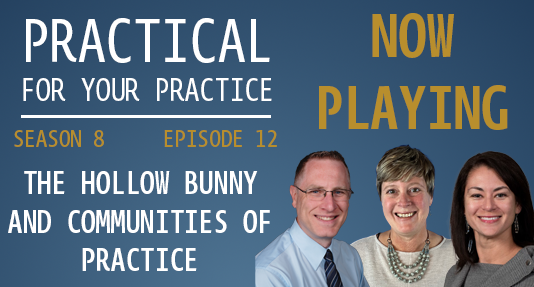
Between heavy caseloads, administrative demands, and the isolation of remote or siloed practice, it is easy for clinicians to feel like they are treading water alone. But what happens when we actively choose to build connection where we are? Click here to check out the episode!
The next CDP Presents is "Modern Approaches to Diagnosing and Treating Mild Traumatic Brain Injury" and will be held on 10 November from noon to 1:30 p.m. Eastern. Attendance is free and participants can receive 1.5 CEs for attending. To register or for more info, click here!
Training
June 8, 2026
On 3-4 June 2026, the Sleep and Fatigue Management in the DoW Convening Event successfully brought together 138 military stakeholders, researchers, and policymakers in a hybrid format at the HJF Headquarters in Bethesda, MD. In direct response to evolving operational requirements and GAO guidance, the summit aimed to advance cross-agency collaboration, strategically track sleep health research, and address systemic barriers to sleep and fatigue management from both an operational and leadership perspective.
The event featured esteemed presenters, including Health Affairs keynote speaker Ms. Susan Orsega, DSc(hc), MS, NP, Deputy Assistant Secretary of War for Health Services Policy and Oversight within the Office of the Assistant Secretary of War for Health Affairs, and Military Leadership keynote speaker Col Christopher McArthur, Marine Corps' Training and Education Command (TECOM). The keynote speakers addressed the critical role sleep plays in optimizing service member readiness and supporting the force, highlighting the vital need for unified, cross-agency strategies to bridge the gap between scientific research and operational leadership.
Additional distinguished presenters included Dr. Jonathan Woodson, MD, MSS, FACS, President of the Uniformed Services University of the Health Sciences, who delivered the welcoming remarks. Dr. Theresa Jackson Santo, Acting Director for Warfighter Performance Optimization (WPO) within the Office of the Deputy Assistant Secretary of War for Safety and Occupational Health (ODASW(SOH)), addressed key milestones from the GAO Working Group, which was established in response to the 2024 GAO report. Furthermore, Dr. Terry Rauch, Ph.D., Acting Deputy Assistant Secretary of War (Health Readiness Policy and Oversight), spoke on the critical implications of sleep deprivation in large-scale combat operations, providing real-world examples from the war in Ukraine.
The event also featured three panel presentations, which focused on the role of sleep and fatigue-related research in advancing mission readiness, sleep and fatigue-related challenges within active military operations, and dissemination and implementation approaches to addressing sleep and fatigue across the DoW and beyond. Panel presenters included Dr. Tracy Jill Doty, Dr. Aaron Laposky, Dr. Emerson Wickwire, CDR Kent Werner, COL Matthew Brock, CWO5 Steven Pearsoll, MSgt Ty Hatcher, COL McArthur, LTC Dan Cassidy, Dr. Camila Almeida, MAJ Allison Brager, LTC(R) Sean Donohue, and Dr. Daniel Taylor.
Each panel was followed by a facilitated breakout session designed to gather insights and perspectives from all attendees. These discussions generated highly-productive ideas, connections, and strategic themes to utilize moving forward. The insights gained from the summit will be compiled into a comprehensive report, presented at the upcoming MHSRS conference, and target publication as a peer-reviewed manuscript.
The success of the event is directly attributed to the esteemed presenters, engaged attendees, and dedicated planning committee and support team, which included: Timothy Rogers, Jaime Rodden, Bill Brim, Maegan Paxton Willing, Diana Dolan, Linda Thompson, Tracy Jill Doty, Kent Werner, Vincent Capaldi, Gloria Park, Camila Almeida, Jordan Ellis, Paula Domenici, Ally Grillo, Sebastian Preilipper, Ariana Bazzi, and Kristian Krslovic.
 March 2, 2026
Announcement of New Roles for Dr. Marjan Holloway
Dr. Marjan G. Holloway, Professor of Medical and Clinical Psychology and Psychiatry, has assumed two additional leadership roles.She has been appointed Chief of Research for the…
March 2, 2026
Announcement of New Roles for Dr. Marjan Holloway
Dr. Marjan G. Holloway, Professor of Medical and Clinical Psychology and Psychiatry, has assumed two additional leadership roles.She has been appointed Chief of Research for the…
March 2, 2026
Dr. Marjan G. Holloway, Professor of Medical and Clinical Psychology and Psychiatry, has assumed two additional leadership roles.
She has been appointed Chief of Research for the Center for Deployment Psychology, providing strategic oversight of research and evaluation that advances evidence-informed mental health training for military and civilian providers in support of the Department of War. She has also been named Vice Chair of Research in the Department of Medical and Clinical Psychology within the School of Medicine, supporting departmental research strategy, mentorship, and the development of a high-impact research portfolio.
These appointments build on Dr. Holloway’s leadership as Director of the Suicide Care, Prevention, and Research Initiative and reflect her continued commitment to suicide prevention, empirically supported psychotherapies, and workforce training, translating rigorous science into meaningful clinical and policy impact.
February 1, 2026
CDP has been officially recognized by Newsweek and Statista as one of America’s Top Online Learning Providers in 2026! Highlighting the best resources for virtual education and digital learning, America’s Top Online Learning Providers 2026 was built based on an online survey of more than 10,000 respondents. We are honored to be included in such an elite list.
October 26, 2026
After more than a decade of stable gun ownership, women's ownership rose starkly between 2018 and 2021, going from 10 percent of adult women owning guns in 2018 to 15 percent in 2021, then up again slightly to 16 percent by 2024. Other national surveys, such as Pew's American Trends Panel, report similar trends in women's gun ownership over this period (although prevalence estimates differ from GSS, likely due to differences in question wording and sampling). Over the same period, men's gun ownership remained relatively flat; the percentage of men who own guns as of 2024 (36 percent) is now quite a bit lower than the ownership rate from two decades prior (40 percent). The result is a continued narrowing of the gender gap in gun ownership, which has fallen from 29 percentage points in 2004 to 19 percentage points in 2024.
October 22, 2026
 The weekly Research Update contains the latest news, journal articles, and useful links from around the web. Some of this week's topics include:
● MDMA-Assisted Therapy May Decrease PTSD Symptoms, Dissociation, Depression, and Functional Disability: A Systematic Review and Meta-Analysis.
● Predicting US Army Soldier Suicide-Related Behaviors at the Time of Periodic Health Assessments.
● Alcohol Consumption Patterns Before and After Retirement: A Longitudinal Cohort Study Within the Survey of Health, Ageing and Retirement in Europe (SHARE).
● Trends in the Prevalence and Severity of Alcohol and Cannabis Use Disorders Among US Adults.
CLICK HERE TO READ THE 22 OCTOBER 2026 RESEARCH UPDATE
October 21, 2026
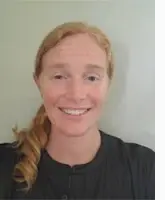 The portrayal of therapists in the media has always been fascinating to me. On one hand, I see it as a reflection of how well we, as behavioral health professionals, are (or aren't) marketing ourselves. When therapy is misunderstood or reduced to clichés, it signals that we still have work to do in advocating for our profession and communicating the true depth of what we offer. At the same time, media can be a surprising barometer for how far the field has come. I love when a character casually uses body-positive language, talks about self-compassion, or references exposure therapy—those buzzwords tell me that some writer probably had a good experience in the therapy room. It’s encouraging to see those moments woven into stories.
But then there’s the flip side- the absolute absurdity that Halloween can bring. This is the time of year when therapists in movies or shows become hilariously off-base: spooky, sinister, clueless, or completely terrifying. So in the spirit of spooky season, let's have a laugh, or a shiver, and take a look at four Halloween films and their portrayal of behavioral health providers. (And warning, there are spoilers included below!)
1. Casper (1995): The Ghost Therapist Who Got Too Close
Let’s kick things off with a beloved 90s Halloween classic: Casper. In this film, we meet Kat, a high school student whose mother has recently passed away. Her father, Dr. James Harvey, is a psychiatrist who—grief-stricken after his wife’s death—makes a rather dramatic pivot in his practice: he begins treating ghosts.
Dr. Harvey moves into a haunted mansion with his daughter and his new clients, the mischievous ghost trio: Stinky, Stretch, and Fatso. In the case of Dr. Harvey, there appear to be minimal boundaries. He dines with his ghostly patients. Lives with them, and even goes out drinking with spectors. Unsurprisingly, this all ends poorly; after a night of ghostly revelry, Dr. Harvey drunkenly stumbles into an open sewer hole and dies. Luckily, thanks to a resurrection machine, he’s brought back to life and reunited with Kat.
Whether or not he made therapeutic progress with his ghostly patients remains unclear—but he is rewarded with a fleeting, emotional visit from his deceased wife, who is now an angel.
2. Wednesday (2022): Therapy as Punishment?
Next up is the more recent TV show, Wednesday. After a particularly creative act of revenge involving a school bully and a pool full of piranhas, Wednesday Addams is expelled. The only school willing to accept her does so on one condition: she must attend therapy with Dr. Valerie Kinbott.
From their very first session, Dr. Kinbott and Wednesday are visually and emotionally at odds—Kinbott is dressed in pristine white, while Wednesday is, of course, clad in black. Rather than building rapport, their sessions become a battleground. Wednesday frequently escapes (or attempts to), and their interactions feel more like a power struggle than a therapeutic alliance. One exchange sums up their dynamic perfectly. When Dr. Kinbott encourages her to open up emotionally, Wednesday deadpans: “Emotions are a gateway trait. They lead to feelings, which lead to tears. I don’t do tears.”
Their relationship never evolves beyond this standoff. In a twist of dark irony, Wednesday later accuses Dr. Kinbott of being a werewolf—only for Kinbott to end up the victim of one herself.
3. Get Out (2017): The Therapist IS the Villian
In Get Out, the therapist, or psychiatrist in this case, is Missy Armitage, the mother of the protagonist's girlfriend—and she’s a chilling twist on therapy. Under the guise of offering help, she uses hypnosis not to heal, but to control, trapping her racially motivated victims in the terrifying "Sunken Place." Missy weaponizes therapeutic tools to strip people of their autonomy, turning the trust typically associated with mental health professionals into something sinister.
4. The Sixth Sense (1999): The Therapist Who Didn’t Know He Was Dead
Of course, no list would be complete without the ultimate spooky therapist: Dr. Malcolm Crowe from The Sixth Sense. This child psychologist dedicates himself to helping a troubled young boy, Cole, who claims to see dead people. Throughout the film, we watch Dr. Crowe try to determine whether Cole is experiencing severe mental illness or something more supernatural. In one of the most iconic plot twists in film history, we discover that Dr. Crowe is actually dead—and his patient Cole, has been helping him, Dr. Crowe, come to terms with his own death all along.
The opinions in CDP Staff Perspective blogs are solely those of the author and do not necessarily reflect the opinion of the Uniformed Services University of the Health Science or the Department of War.
Amanda McCabe, Psy.D., is a Military Mental Health Psychologist with the Consortium for Defense Psychology (CDP) at the Uniformed Services University of the Health Sciences in Bethesda, Maryland. In this capacity, she develops and presents trainings on a variety of evidence-based therapies. Prior to the CDP, Dr. McCabe served as a clinical psychologist in the Army from 2013 to 2024.
 October 5, 2026
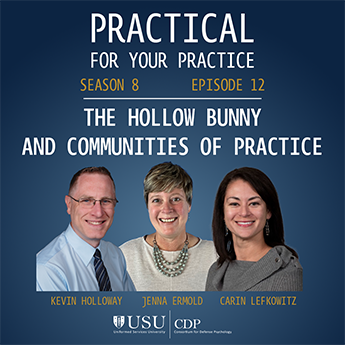
The Hollow Bunny and Communities of Practice
Between heavy caseloads, administrative demands, and the isolation of remote or siloed practice, it is easy for clinicians to feel like they are treading water alone. But what…
October 5, 2026
The Hollow Bunny and Communities of Practice
Between heavy caseloads, administrative demands, and the isolation of remote or siloed practice, it is easy for clinicians to feel like they are treading water alone. But what…
October 5, 2026
 September 21, 2026
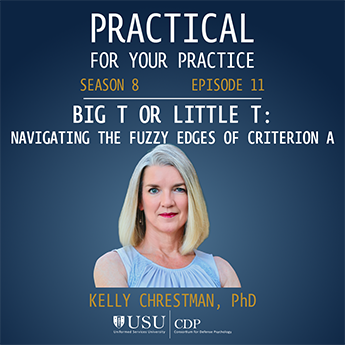
Big T or Little T: Navigating the Fuzzy Edges of Criterion A
Accurately diagnosing PTSD is the first step in getting a patient connected with the best care. But understanding and applying Criterion A (of the DSM-5) can be a challenge for…
September 21, 2026
Big T or Little T: Navigating the Fuzzy Edges of Criterion A
Accurately diagnosing PTSD is the first step in getting a patient connected with the best care. But understanding and applying Criterion A (of the DSM-5) can be a challenge for…
September 21, 2026
 September 8, 2026
Don't Burn OUT, Burn IN! Stoking the Flame with Occupational Therapy
In this episode, hosts Drs. Jenna Ermold and Carin Lefkowitz welcome occupational therapists Staci Molinar and Michelle Luken for the podcast's very first deep dive into the world…
September 8, 2026
Don't Burn OUT, Burn IN! Stoking the Flame with Occupational Therapy
In this episode, hosts Drs. Jenna Ermold and Carin Lefkowitz welcome occupational therapists Staci Molinar and Michelle Luken for the podcast's very first deep dive into the world…
September 8, 2026
The Military Child & Family Collaboratory (MCFC) team at the Consortium for Defense Psychology (CDP) is excited to announce the third annual conference, Evolving Care for MEDB Youth and Families: A Continuum of Care. The event will bring together researchers, clinicians, educators, policymakers, advocates and community leaders to explore innovative approaches to supporting youth with mental health, emotional, developmental, and behavioral (MEDB) needs and the families who care for them.
CLICK HERE FOR MORE INFO OR TO REGISTER!

Evolving Care for MEDB Youth & Families: A Continuum of Care Conference 2026