UNIFORMED SERVICES UNIVERSITY

Featured
On 1 June 2026, the Center for Deployment Psychology officially becomes the Consortium for Defense Psychology, continuing to use the acronym CDP while embracing a name that better reflects who we are today and where we are headed tomorrow.
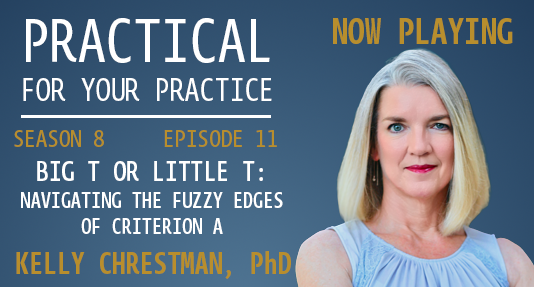
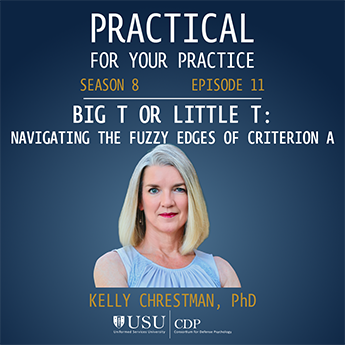
Accurately diagnosing PTSD is the first step in getting a patient the best care. Understanding and applying Criterion A can be a challenge for even the most experienced clinician. The process can give Goldilocks vibes: are you being too lenient or too strict with the definition of “trauma?” Dr. Kelly Chrestman helps us navigate the blurry edges of Criterion A as we try to get it “just right.” Click here to check out the episode!
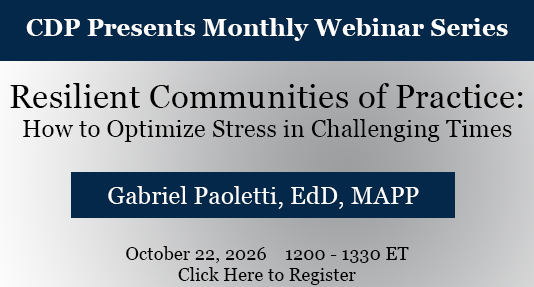
The next CDP Presents is "Resilient Communities of Practice: How to Optimize Stress in Challenging Times" and will be held on 22 October from noon to 1:30 p.m. Eastern. Attendance is free and participants can receive 1.5 CEs for attending. To register or for more info, click here!
Researcher is recruiting active-duty U.S. service members for an anonymous online study examining how different military tour types are associated with drinking motivations, alcohol consumption, alcohol-related problems. Click here to learn more!
Training
June 8, 2026
On 3-4 June 2026, the Sleep and Fatigue Management in the DoW Convening Event successfully brought together 138 military stakeholders, researchers, and policymakers in a hybrid format at the HJF Headquarters in Bethesda, MD. In direct response to evolving operational requirements and GAO guidance, the summit aimed to advance cross-agency collaboration, strategically track sleep health research, and address systemic barriers to sleep and fatigue management from both an operational and leadership perspective.
The event featured esteemed presenters, including Health Affairs keynote speaker Ms. Susan Orsega, DSc(hc), MS, NP, Deputy Assistant Secretary of War for Health Services Policy and Oversight within the Office of the Assistant Secretary of War for Health Affairs, and Military Leadership keynote speaker Col Christopher McArthur, Marine Corps' Training and Education Command (TECOM). The keynote speakers addressed the critical role sleep plays in optimizing service member readiness and supporting the force, highlighting the vital need for unified, cross-agency strategies to bridge the gap between scientific research and operational leadership.
Additional distinguished presenters included Dr. Jonathan Woodson, MD, MSS, FACS, President of the Uniformed Services University of the Health Sciences, who delivered the welcoming remarks. Dr. Theresa Jackson Santo, Acting Director for Warfighter Performance Optimization (WPO) within the Office of the Deputy Assistant Secretary of War for Safety and Occupational Health (ODASW(SOH)), addressed key milestones from the GAO Working Group, which was established in response to the 2024 GAO report. Furthermore, Dr. Terry Rauch, Ph.D., Acting Deputy Assistant Secretary of War (Health Readiness Policy and Oversight), spoke on the critical implications of sleep deprivation in large-scale combat operations, providing real-world examples from the war in Ukraine.
The event also featured three panel presentations, which focused on the role of sleep and fatigue-related research in advancing mission readiness, sleep and fatigue-related challenges within active military operations, and dissemination and implementation approaches to addressing sleep and fatigue across the DoW and beyond. Panel presenters included Dr. Tracy Jill Doty, Dr. Aaron Laposky, Dr. Emerson Wickwire, CDR Kent Werner, COL Matthew Brock, CWO5 Steven Pearsoll, MSgt Ty Hatcher, COL McArthur, LTC Dan Cassidy, Dr. Camila Almeida, MAJ Allison Brager, LTC(R) Sean Donohue, and Dr. Daniel Taylor.
Each panel was followed by a facilitated breakout session designed to gather insights and perspectives from all attendees. These discussions generated highly-productive ideas, connections, and strategic themes to utilize moving forward. The insights gained from the summit will be compiled into a comprehensive report, presented at the upcoming MHSRS conference, and target publication as a peer-reviewed manuscript.
The success of the event is directly attributed to the esteemed presenters, engaged attendees, and dedicated planning committee and support team, which included: Timothy Rogers, Jaime Rodden, Bill Brim, Maegan Paxton Willing, Diana Dolan, Linda Thompson, Tracy Jill Doty, Kent Werner, Vincent Capaldi, Gloria Park, Camila Almeida, Jordan Ellis, Paula Domenici, Ally Grillo, Sebastian Preilipper, Ariana Bazzi, and Kristian Krslovic.
 March 2, 2026
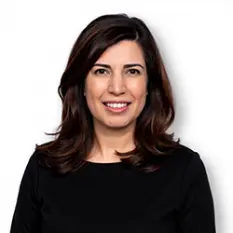
Announcement of New Roles for Dr. Marjan Holloway
Dr. Marjan G. Holloway, Professor of Medical and Clinical Psychology and Psychiatry, has assumed two additional leadership roles.She has been appointed Chief of Research for the…
March 2, 2026
Announcement of New Roles for Dr. Marjan Holloway
Dr. Marjan G. Holloway, Professor of Medical and Clinical Psychology and Psychiatry, has assumed two additional leadership roles.She has been appointed Chief of Research for the…
March 2, 2026
Dr. Marjan G. Holloway, Professor of Medical and Clinical Psychology and Psychiatry, has assumed two additional leadership roles.
She has been appointed Chief of Research for the Center for Deployment Psychology, providing strategic oversight of research and evaluation that advances evidence-informed mental health training for military and civilian providers in support of the Department of War. She has also been named Vice Chair of Research in the Department of Medical and Clinical Psychology within the School of Medicine, supporting departmental research strategy, mentorship, and the development of a high-impact research portfolio.
These appointments build on Dr. Holloway’s leadership as Director of the Suicide Care, Prevention, and Research Initiative and reflect her continued commitment to suicide prevention, empirically supported psychotherapies, and workforce training, translating rigorous science into meaningful clinical and policy impact.
February 1, 2026
CDP has been officially recognized by Newsweek and Statista as one of America’s Top Online Learning Providers in 2026! Highlighting the best resources for virtual education and digital learning, America’s Top Online Learning Providers 2026 was built based on an online survey of more than 10,000 respondents. We are honored to be included in such an elite list.
September 28, 2026
The "(t)otal annual cost of morbidity-related productivity losses attributable to" major depressive disorder among U.S. adults, according to an article in the American Journal of Preventive Medicine -- Morbidity-related productivity losses from major depressive disorder among U.S. adults. This equates to $5,824 "per affected adult in 2024."
Inability to work costs accounted for 44% of total productivity losses, followed by presenteeism (33%), absenteeism (18%), and household productivity loss (5%). Total productivity loss costs and per-person loss costs differed by sex.
September 24, 2026
 The weekly Research Update contains the latest news, journal articles, and useful links from around the web. Some of this week's topics include:
● Family Composition as a Moderator of PTSD and Suicidal Ideation-Related Risk for Non-Secure Firearm Storage Among U.S. Army Soldiers and Veterans.
● Prior Sexual Violence, PTSD Symptoms, and Recovery Trajectories After New Trauma.
● Mapping Clinical Diagnoses Associated With Neurodiversity and Neurodivergence in Mental Health Research: A Scoping Review.
● JAMA Insights: Psilocybin
CLICK HERE TO READ THE 24 SEPTEMBER 2026 RESEARCH UPDATE
September 23, 2026
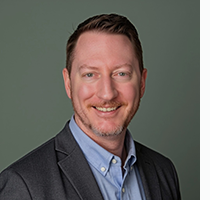 By David Obergfell, DSW, LCSW, BCD, DAAETS
I have sat across from people in the deepest reaches of their pain. I have lost colleagues, supervisees, and clients to suicide across a career that spans more than twenty-five years in mental and behavioral health. And I have experienced suicide loss personally, within my own family.
None of that makes me an expert on death. But it has given me a particular kind of education on what helps people stay alive, and what the research, increasingly, confirms: connection is not a complement to suicide prevention; it may be its most powerful upstream force.
What Suicide Is Really About
Researcher and clinical psychologist Dr. Thomas Joiner's interpersonal theory of suicide remains one of the most empirically supported frameworks we have. In short: people become most vulnerable to suicide when two painful beliefs converge. The perceived beliefs of “I am a burden to those around me” and “I do not belong anywhere.” Thwarted belonging and perceived burdensomeness. Disconnection from others and from one's sense of worth within a community.
These are not primarily psychiatric diagnoses. They are relational wounds.
Dr. Craig Bryan, whose work at The Ohio State University and across military and veteran populations spans more than 300 published studies and the influential book Rethinking Suicide, has further articulated how suicide risk is not a fixed trait but a dynamic state, shaped profoundly by the quality and felt safety of a person's social environment and real-time circumstances. Both frameworks suggest something most of us already know from lived experience: when a person feels genuinely seen, genuinely needed, and genuinely part of something, the calculus changes.
A Cultural Reflection for Consideration
Here I want to offer a thought, not a settled argument, but an invitation into reflection.
Anthropologist Edward Hall distinguished between high-context and low-context cultures. High-context cultures communicate meaning through relationships, shared history, and collective identity. What goes unsaid is understood because community provides the context. Low-context cultures rely more on explicit, individualized communication; meaning must be stated because shared context cannot be assumed.
Most Western industrialized societies, and the United States in particular, skew decidedly low context. We value independence, self-reliance, and individual achievement. These are genuine strengths. But, unrealized by an individual, they can carry a cost in the domain of mental health.
In a cultural context where self-sufficiency is the standard, struggle reads as failure. Needing others signals weakness. Asking for help means imposing a burden. The implicit message becomes, "You should be able to handle this yourself."
For someone already in the grip of perceived burdensomeness and thwarted belonging, whose internal experience is already whispering, “I am too much and not enough,” a culture that quietly confirms those messages is not a neutral backdrop but can be an accelerant.
The protective factors that appear most consistently in the research are belonging, shared meaning, community accountability, and knowing others would notice your absence. They exist, or fail to exist, in how we organize our relationships, our neighborhoods, and our institutions. This seems worth sitting with, especially for looking at human-centered design in prevention.
What Connection?
When I say connection is an antidote to suicide, I mean something layered.
Connection to self, the capacity to turn toward one's own emotional experience rather than away from it. Healing often shows up here first: someone notices joy again, or grief, or even simple physical hunger. Any signal from the body that says I am still here and something matters.
Connection to others, the experience of being known, imperfect and still chosen. Of having someone who notices when you go quiet and says something. Of mutual accountability that carries a person when they cannot carry themselves.
Connection to meaning, a sense that one's presence has consequences. That something, or someone, is worth staying for. Connection to possibility, the ability to imagine a future self, to believe that current pain is not the permanent shape of things. Hope, in its most honest form, is a connective tissue.
What Evidence Tells Us
One of the more compelling examples in recent prevention science is the Wingman-Connect program, developed for U.S. Air Force personnel and now expanded as Core Connections for law enforcement, healthcare, and community organizations. Rather than focusing on identifying and treating at-risk individuals, the program trains small units to strengthen cohesion, shared purpose, and collective skills to navigate challenges together.
Published in JAMA Network Open, the results showed significant reductions in suicidal ideation, depression, and occupational problems. A follow-up network analysis found that at-risk Airmen in trained units were far less likely to become isolated and saw an average 53% gain in valued peer connections, even though the program never explicitly targeted at-risk individuals. Protection emerged from the community itself.
Dr. Peter Wyman, the program's lead researcher, noted that suicide-preventive coping skills are most often learned from close-knit peers. The implication is quietly radical: build the community first, and the protection follows. This is upstream prevention, not the absence of treatment, but the presence of conditions that make crisis less likely in the first place.
What We Can Do Together
Prevention begins before crisis. It begins with the daily habits of how we show up for each other.
Notice and name. The most protective thing a person can offer someone they care about is to acknowledge their presence and ask, genuinely, with time to wait for the answer.
Reduce the cost of struggling. In communities where failure is treated as information rather than character, people stay visible longer. They don't have to disappear to be safe.
Build accountable relationships, not just supportive ones. Support implies direction. Accountability is mutual. Someone who knows you will notice your absence is different from someone available if you reach out.
Examine your community's norms. What does it mean, in your workplace, your unit, your family, to need help? What happens to people who say so? The answers tell you a great deal about the upstream conditions you are living in.
Human beings change throughout life. We are not fixed. The circumstances that generate despair are not permanent, even when they feel that way. And the research is consistent: that connection to self, to others, to meaning, to possibility is among the most powerful forces we have for keeping each other here.
If you are reading this and it feels personal, know you are not a burden. The people around you would feel your absence. If you are struggling right now, please reach out to someone you trust or one of the resources below. We do this better together.
The opinions in CDP Staff Perspective blogs are solely those of the author and do not necessarily reflect the opinion of the Uniformed Services University of the Health Science or the Department of War.
David Obergfell, DSW, LCSW, BCD, DAAETS, is a Military Mental Health Social Worker and Subject Matter Expert with the Consortium for Defense Psychology (CDP) at the Uniformed Services University of the Health Sciences in Bethesda, Maryland. In this capacity, he supports military behavioral health faculty on assignments and bandwidth across the center, providing professional development and performance management
Resources
Crisis Support
Research & Frameworks
Upstream & Community Prevention
 September 21, 2026
Big T or Little T: Navigating the Fuzzy Edges of Criterion A
Accurately diagnosing PTSD is the first step in getting a patient connected with the best care. But understanding and applying Criterion A (of the DSM-5) can be a challenge for…
September 21, 2026
Big T or Little T: Navigating the Fuzzy Edges of Criterion A
Accurately diagnosing PTSD is the first step in getting a patient connected with the best care. But understanding and applying Criterion A (of the DSM-5) can be a challenge for…
September 21, 2026
 September 8, 2026
Don't Burn OUT, Burn IN! Stoking the Flame with Occupational Therapy
In this episode, hosts Drs. Jenna Ermold and Carin Lefkowitz welcome occupational therapists Staci Molinar and Michelle Luken for the podcast's very first deep dive into the world…
September 8, 2026
Don't Burn OUT, Burn IN! Stoking the Flame with Occupational Therapy
In this episode, hosts Drs. Jenna Ermold and Carin Lefkowitz welcome occupational therapists Staci Molinar and Michelle Luken for the podcast's very first deep dive into the world…
September 8, 2026
 August 24, 2026
Helping a Neurospicy Brain: What Do Neurodiverse Patients Need to Heal from Trauma?
“Neurodiversity” sounds like a recent buzzword, but it’s just a succinct way to capture what we all know: everyone does not process information the same way. Many formal…
August 24, 2026
Helping a Neurospicy Brain: What Do Neurodiverse Patients Need to Heal from Trauma?
“Neurodiversity” sounds like a recent buzzword, but it’s just a succinct way to capture what we all know: everyone does not process information the same way. Many formal…
August 24, 2026
The Military Child & Family Collaboratory (MCFC) team at the Consortium for Defense Psychology (CDP) is excited to announce the third annual conference, Evolving Care for MEDB Youth and Families: A Continuum of Care. The event will bring together researchers, clinicians, educators, policymakers, advocates and community leaders to explore innovative approaches to supporting youth with mental health, emotional, developmental, and behavioral (MEDB) needs and the families who care for them.
CLICK HERE FOR MORE INFO OR TO REGISTER!

Evolving Care for MEDB Youth & Families: A Continuum of Care Conference 2026