
Stories
Staff Perspective: Sleep Isn’t Optional, It’s Operational
August 6, 2025
 By Jaime Rodden
Most of us have struggled with getting enough sleep at some point, but when you compare sleep habits between civilians and service members, the difference is striking. While about a third of the general population reports not getting the recommended seven hours of sleep per night, the number jumps to more than 85% among service members.
So why is sleep such a major challenge for military personnel? A 2024 report from the Government Accountability Office (GAO) provides some answers. Medical conditions, like insomnia, sleep apnea, PTSD, depression and anxiety, substance abuse, and TBI are all common and all negatively affect sleep. On top of that, challenging work hours are also a frequently reported problem. Service members often work irregular shifts, pull long hours, and wake up early, sometimes in high-stress, high-stakes environments. For deployed service members, sleeping gets even tougher due to poor conditions like loud noise, bad lighting, uncomfortable bedding, and extreme temperatures. All of these factors play a role in the reduced sleep health of service members. Sleep doesn’t just impact service members’ health, it impacts force readiness.
Force readiness is the “ability of military forces to fight and meet the demands of assigned missions in line with national strategy”. A key piece of this sentiment is combat readiness, which depends heavily on personnel being at the top of their game physically, cognitively, and socially. These three connected areas, known as the biopsychosocial model, can be severely impacted by sleep deprivation.
Physical Readiness
Sleep plays a major role in physical performance. It affects strength, endurance, visual sharpness, and the ability to carry out complex military tasks like handling firearms or executing tactical maneuvers. When service members are sleep deprived, they don’t just feel tired, they lift less, run slower, and their responses are delayed. They’re also more prone to injuries and weight gain, which can lead to early separation from service and higher healthcare costs. The physical impact goes far beyond what the average individual may experience after a night of poor sleep, it affects mission outcomes and force readiness.
Cognitive Readiness
Cognition is another critical piece. Reaction time, memory, focus, decision-making, and reasoning all take a hit when someone is sleep-deprived. In a military setting, even small mistakes can lead to severe consequences. Sleep also affects emotional regulation, making it harder to manage frustration or confusion and easier to fall into negative mood states. Mental fatigue makes even routine tasks feel more physically demanding, increasing the risk of injury, burnout, or mistakes.
Social Readiness
Sleep impacts how we relate to and work with others. This includes communication, teamwork, empathy, impulse control, and emotional intelligence. These abilities are crucial to effective teamwork and unit cohesion, which play a large role in mission success. Sleep deprived service members may find it harder to connect with others, resolve conflicts, or collaborate effectively. For leaders, the impact can be even more serious. Sleep-deprived leaders tend to struggle with decision-making, critical thinking, and memory, which can affect the entire unit. Interestingly, studies show that effective leadership can actually counteract some of the negative effects of sleep deprivation on team performance, making sleep a leadership issue too.
The Bottom Line
Sleep is more than just a health concern. It’s a readiness issue that affects every level of military performance, from the individual service member to the entire force. As research continues to unpack the full scope of how sleep shapes physical, cognitive, and social functioning, one thing is clear: sleep isn’t optional, it’s operational.
With this in mind, our team developed a series of targeted infographics designed to highlight how sleep is essential for operational readiness. These resources are tailored to meet the unique needs of different military audiences, including branches like Space Force, and leadership roles. Our goal is to equip service members with practical, actionable information to encourage them to prioritize sleep, and in turn, improve their performance and enhance combat readiness. The infographics can be accessed here: https://deploymentpsych.org/content/sleep-health-handouts
The opinions in CDP Staff Perspective blogs are solely those of the author and do not necessarily reflect the opinion of the Uniformed Services University of the Health Science or the Department of Defense.
Jaime Rodden, is a Research Coordinator for the Center for Deployment Psychology (CDP). She received her Bachelor of Science in Exercise Science from Linfield University, and Master of Science in Exercise Physiology from California State University, Fullerton.
References:
JCS, J. P. (2017). Doctrine for the Armed Forces of the United States, DOD,
Incorporating Change 1, July 12, 2017. GL-10.
https://www.jcs.mil/Portals/36/Documents/Doctrine/pubs/jp1_ch1.pdf?ver=2019-02-11-174350967
Office, G. A. (2024). Military readiness: Comprehensive approach needed to address
service member fatigue and manage related efforts.
https://www.gao.gov/assets/gao-24-105917.pdf
Mysliwiec, V., Gill, J., Lee, H., Baxter, T., Pierce, R., Barr, T. L., Krakow, B., & Roth, B. J.
(2013). Sleep disorders in US military personnel: a high rate of comorbid insomnia and
obstructive sleep apnea. Chest, 144(2), 549-557.
Grandou, C., Wallace, L., Fullagar, H. H., Duffield, R., & Burley, S. (2019). The effects of
sleep loss on military physical performance. Sports Medicine, 49(8), 1159-1172.
Engel, G. L. (1977). The need for a new medical model: a challenge for biomedicine.
Science, 196(4286), 129-136.
LaGoy, A. D., Conkright, W. R., Proessl, F., Sinnott, A. M., Beckner, M. E., Jabloner, L.,
Eagle, S. R., Sekel, N. M., Roma, P. G., & Dretsch, M. N. (2023). Less daytime
sleepiness and slow wave activity during sleep predict better physical readiness in
military personnel. Sleep Health, 9(1), 93-99.
LoPresti, M. L., Anderson, J. A., Saboe, K. N., McGurk, D. L., Balkin, T. J., & Sipos, M. L.
(2016). The impact of insufficient sleep on combat mission performance. Military
Behavioral Health, 4(4), 356-363.
Killgore, W. D. (2010). Effects of sleep deprivation on cognition. Progress in brain
research, 185, 105-129.
Killgore, W. D., Kahn-Greene, E. T., Lipizzi, E. L., Newman, R. A., Kamimori, G. H., &
Balkin, T. J. (2008). Sleep deprivation reduces perceived emotional intelligence and
constructive thinking skills. Sleep medicine, 9(5), 517-526.
Olsen, O. K., Pallesen, S., Torsheim, T., & Espevik, R. (2016). The effect of sleep
deprivation on leadership behaviour in military officers: An experimental study. Journal of
sleep research, 25(6), 683-689.
Staff Perspective: Through SPC Jones’ Eyes - How Stigma Disrupts Mental Health Support for Service Members
July 30, 2025
 By
By Mental health stigma remains one of the most persistent barriers to care for service members. It operates at multiple levels—internally, socially, and institutionally—limiting help-seeking behavior and impacting readiness and relationships.
This four-part fictional vignette follows a day in the life of a junior enlisted soldier. After each act, we explore how different forms of stigma shape the individual’s behavior, relationships, and access to care.
As you read, consider: How might you recognize and respond to stigma in your work with service members?
Act I: The Couch
Specialist Sean Jones sits up abruptly, gasping for air. He realizes he's not at the field exercise—he’s just awakened from a vivid nightmare, drenched in sweat. A junior enlisted soldier recently returned from training, Sean witnessed a serious accident during the exercise that resulted in the likely medical discharge of a close friend. His wife, Stacey, groggily rolls over and asks if he’s okay.
“I’m fine,” he snaps, grabbing his pillow and heading to the couch.
Alone and restless, he tosses and turns, ruminating about the upcoming training. He worries that his nightmares, jumpiness, and unexpected urges to cry are signs of weakness. He fears this “weakness” will result in his failing the next training exercise. In reality, he feels like he doesn't deserve to be in the Army. And that makes him feel guilty because he’s still in and his friend’s career is over. After tossing and turning for hours, Sean gets up the next morning, tired and irritable, and leaves for work without speaking to Stacey. He wants to apologize but that means he’ll have to talk about what was going on with him and he “just can’t do it.” So instead he starts his day feeling exhausted, ashamed, and alone.
Analysis: Self-Stigma
Self-stigma refers to the internalization of negative beliefs about mental health, leading individuals to view their own distress as weakness or failure (Thornicroft, et. al., 2022).
SPC Jones interprets his trauma responses as personal flaws rather than normal reactions to a disturbing event. These beliefs erode his confidence, contribute to anticipatory anxiety about his performance, and inhibit emotional connection with his partner.
Self-stigma is associated with reduced help-seeking, impaired self-esteem, and social withdrawal, all of which are visible in this interaction (Corrigan & Rao, 2012).
Act II: The Break Room
At work, Sean is distracted and struggling to get work done. His colleague Forsyth notices and asks him what’s going on. He opens up enough to admit he is having trouble sleeping. Forsyth suggests going to Behavioral Health, noting that the clinic really helped him manage his sleep issues and post-deployment stress.
Sean hesitates thinking, Forsyth deployed—his problems are "real." I’m messed up because of an accident that happened during training…and I wasn’t even the one in the accident! His own distress feels unjustified in comparison. Still, he makes a call to Behavioral Health during a break, hoping for an after-hours appointment that won’t interfere with duty hours.
No such luck—the only available times are during duty hours. As he’s on hold, his NCO walks by, loudly complaining:
“If one more soldier tells me they’re unavailable because of a ‘behavioral health appointment'— I'm going to go ballistic on them! These punks are a bunch of selfish wusses who don’t have what it takes to be real soldiers!”
Spotting Sean, the NCO comes over and claps him on the shoulder.
“But not SPC Jones here! Jones got what it takes and knows how to get the job done. He’s always mission-first!”
SPC Jones abruptly ends the call, discreetly putting his phone back in his pocket. He acknowledges his NCO and heads back to work without making an appointment.
Analysis: Public and Organizational Stigma
Public stigma involves negative stereotypes or prejudice from others—often peers, leaders, or society at large towards those with mental health conditions (Thornicroft, et. al., 2022). The NCO’s remarks reinforce the idea that seeking help is selfish or weak, which discourages soldiers from pursuing care—even when they need it.
Organizational stigma refers to structural barriers, such as limited availability of care during off-duty hours or command climates that discourage medical appointments (Thornicroft, et. al., 2022). In this case, both forms of stigma intersect to shut down Sean’s attempt to access care.
Act III: The Lunch Table
Meanwhile, Stacey meets friends for lunch. Tired from last night’s interrupted sleep, she yawns repeatedly. Her friends ask about it, and she hesitantly mentions Sean waking abruptly and shouting during the night.
One friend jokes: “you better watch out—make sure he doesn’t snap and kill you in your sleep!” The group laughs. Stacey forces a chuckle, then changes the subject. The comment unsettles her. She isn’t afraid of Sean, but she suddenly feels unsure about opening up to friends—or about asking him what's going on.
Analysis: Stigma by Association
Stigma by association occurs when family members or partners experience social rejection, judgment, or discomfort due to their relationship with someone perceived to have a mental health issue (Thornicroft, et. al., 2022).
Although the comment was meant as a joke, it reflects a damaging stereotype—linking mental illness to violence—and reinforces Stacey’s reluctance to seek support or ask questions. Like many military spouses, she may feel isolated from both her partner and her social circle.
Act IV: The Search
That evening, still troubled, Sean decides to look for a civilian provider outside the military system. He feels a glimmer of hope—maybe he can get help without his command knowing.
But the process is overwhelming. Who should he call—a counselor, psychologist, psychiatrist, psychiatric nurse practitioner? After a quick text exchange with Forsyth, he decides to call clinics that can prescribe medication. He finds one with availability—then he hears the cost: $300 for the intake, $150–$200 for follow-ups.
“Never mind,” he says, and ends the call. That faint hope disappears. He feels more lost than ever. Hopeless thoughts begin to surface. Maybe everyone would be better off without me, he thinks.
Analysis: Structural Stigma and Access Barriers
Sean’s final attempt highlights ongoing structural barriers to care outside the military: unclear provider roles, high out-of-pocket costs, and confusing systems of access.
Even when service members are motivated to seek care privately, these factors often lead to frustration, avoidance, and worsening distress (Kim et al., 2011). This moment illustrates how logistical obstacles can reinforce despair and delay treatment.
Conclusion: What Can Providers Do?
Understanding how stigma functions at every level—internal, interpersonal, and systemic—is key to helping service members like Sean. As providers, we can make a profound difference by intentionally addressing these barriers.
- As providers, we can: Normalize trauma responses during education and intake
- Address self-stigma explicitly in therapy
- Collaborate with commands to reduce public and organizational stigma
- Support spouses and families affected by stigma by association
- Advocate for accessible care pathways both within and outside the military system
By identifying and dismantling stigma—internally, interpersonally, and systemically—we can strengthen the mental health, relationships, and mission readiness of our service members (World Health Organization, 2024).
Resources
Military Crisis Line: Dial 988 and press 1, or visit VeteransCrisisLine.net
InTransition Program: https://www.health.mil/inTransition – Free, confidential coaching for service members transitioning between mental health providers
The opinions in CDP Staff Perspective blogs are solely those of the author and do not necessarily reflect the opinion of the Uniformed Services University of the Health Science or the Department of Defense.
Adria Williams, Ph.D., is a Military Behavioral Health Psychologist at the Center for Deployment Psychology (CDP) with the Uniformed Services University of the Health Sciences. Dr. Williams is a suicide prevention subject matter expert and trainer.
References
Corrigan, P.W. & Rao, D. (2012) On the self-stigma of mental illness: stages, disclosure, and
strategies for change. Canadian Journal of Psychiatry, 57(8):464–9
(https://doi.org/10.1177/070674371205700804).
Kim, P. Y., Britt, T. W., Klocko, R. P., Riviere, L. A., & Adler, A. B. (2011). Stigma, negative
attitudes about treatment, and utilization of mental health care among soldiers. Military
Psychology, 23(1), 65–81. (https://doi.org/10.1080/08995605.2011.534415).
Thornicroft G., Sunkel C., Aliev, A. A., Baker, S., Brohan, E., el Chammay, R., et al. (2022). The
Lancet Commission on Ending Stigma and Discrimination in Mental Health. Lancet,
400(10361):1438–80 (https://doi.org/10.1016/S0140-6736(22)01470-2).
World Health Organization (2024). Mosaic Toolkit to End Stigma and Discrimination in Mental
Health. Copenhagen: WHO Regional Office for Europe.
(https://www.who.int/europe/publications/i/item/9789289061384).
Staff Perspective: Language that Heals, Not Harms
July 23, 2025
 By
By Behavioral health providers are crucial in combating the stigma that prevents service members from seeking mental health care. However, providers can inadvertently perpetuate this stigma through their language and tone. Phrases such as “depressed people,” “suffering from,” “mental illness,” or even casual remarks that minimize symptoms can alienate military clients who are already reluctant to engage. The most recent Department of Defense Health Related Behaviors Survey (2021) revealed that 1 in 4 active-duty personnel reported mental health concerns, yet fewer than half sought treatment, frequently citing fear of judgment. Providers, who adopt strength-based communication that recognizes the impact of individual differences, are vital in changing this dynamic and improving access to care.
Consider the perspective of a military member who silently experienced symptoms of PTSD for years. This individual avoided counseling, convinced it would damage their reputation and stall their military career. When a behavioral health provider embedded within their unit started using mission-ready terminology, framing mental health as “tactical readiness” and therapy as “resilience training,” the individual finally sought help. This not only alleviated their symptoms, but also enhanced their performance, prompting others in the unit to reflect on their own well-being. Such stories underscore that altering our approach to discussing mental health is not merely ethical, but also highly effective.
One tool that you can put in your toolbox to support this effort is the Mental Health Stigma Reduction Toolkit from the Psychological Health Center of Excellence (PHCoE). This comprehensive, evidence-based guide offers strategies for reducing stigma in various military settings. It provides templates, leadership messaging, and advice for refining clinical language to encourage engagement. Providers can actively dismantle barriers to care by integrating this toolkit and consistently using respectful, empowering language that highlights mission-readiness and resilience. In doing so, we not only support the individual but also bolster the strength of the entire force.
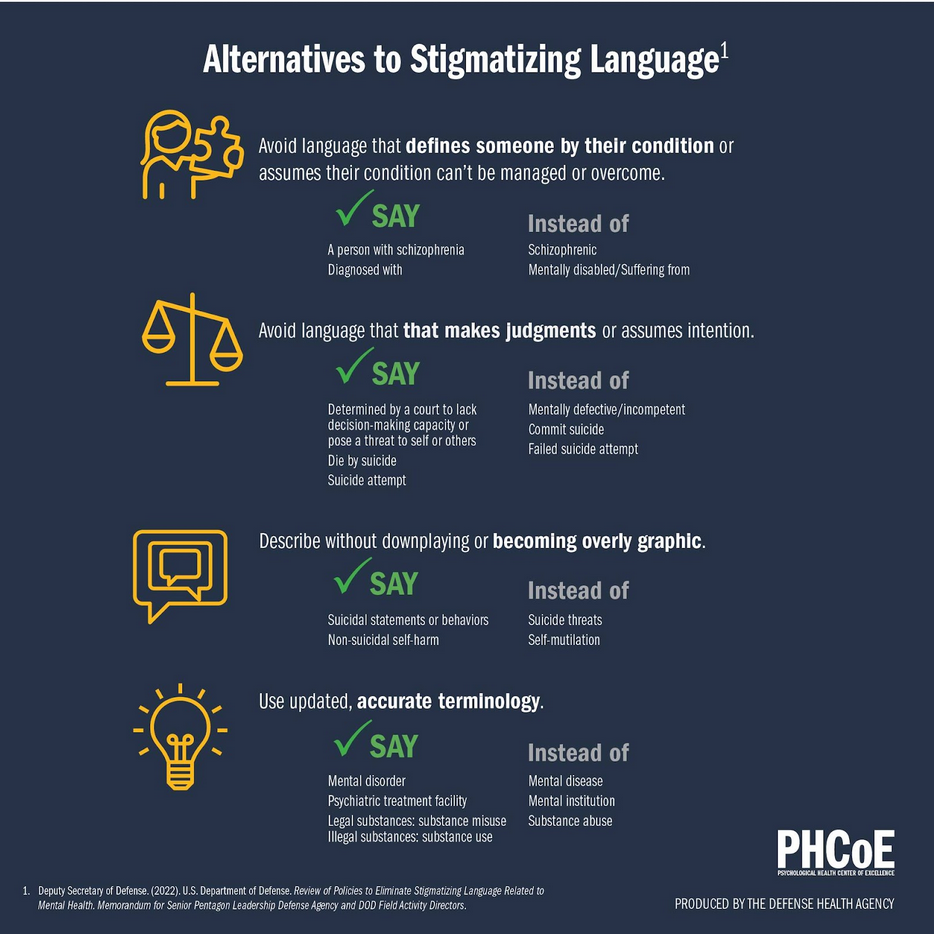
Source: Psychological Health Center for Excellence
The opinions in CDP Staff Perspective blogs are solely those of the author and do not necessarily reflect the opinion of the Uniformed Services University of the Health Science or the Department of Defense.
Annie Layden, LICSW, is a licensed clinical social worker working as a Military Behavioral Health Social Worker for the Center for Deployment Psychology at the Uniformed Services University of the Health Sciences in Bethesda, Maryland.
Staff Perspective: “Do you have children?” The Milspouse Elephant in the Room
July 16, 2025
 By Heather Tompkins, Ph.D, MS-ATR, LCMHC
Life as a military spouse is synonymous with frequent moves, starting over, and re-establishing connections. For a large portion of my married life, each PCS (Permanent Change of Station) and the initial social functions that followed brought with it a certain angst related to connecting- especially with other military spouses. Although I knew the intent was to meet, interact, and form connections, there tended to be an “elephant in the room” at each of these gatherings.
Do you have kids? An innocent question most spouses asked as an opener to start conversation. As newlyweds this question was easy to respond to. “No kids, but at some point.” Yet, as newlywed status fades and you have been married 3, 5, 10 years…this question starts to have a different impact- especially when “at some point” has not occurred.
While the military is comprised of ~1.31 million active-duty service members (MilitaryOneSource, 2023), within each of the service branches the subcommunities are not as large as you would think. Most specialty areas, such as aviators/pilots within the Marine Corps, either know each other or of each other from various interactions within their jobs. So, it is inevitable you will cross paths or be assigned to the same duty stations with the same people again. That is where the milspouse elephant in the room begins to become more blatant- it has been several years or duty stations since seeing this spouse and the looming question emerges, “do you have kids?” When the answer is “no” yet again, there exists this comfort to ask more… “do you want kids?” or “when are you going to have them?” For me, these interactions were typically followed by the formation of a knot in my stomach and deciding how to respond. Do I say what is really going through my mind or the practiced generic response. Unbeknownst to those asking, this internal dialogue was my source of angst during these social interactions- and I later learned was shared by others who experience infertility.
Within the general population, it is estimated that one in six people of reproductive age will experience infertility at some point (World Health Organization, 2024). Recent studies within the military community suggest those numbers may be higher. The Blue Star Families 2021 Military Lifestyle Survey found that 67% of respondents have experienced at least one family-building challenge, and the 2024 Military Family Building Survey from the Building Military Families Network found that 70% of respondents identified as having an infertility connection. The more I have learned and been open to talking about my own infertility journey, the more common I have found it to be within the military community.
Despite this occurrence, most military families experience various challenges to accessing fertility treatments. There are only six military treatment facilities (Fort Sam Brooke Army Medical Center, San Antonio, TX; Tripler Army Medical Center, Honolulu, HA; Walter Reed National Military Medical Center, Bethesda, MD; Womack Army Medical Center, Ft. Bragg, NC; Naval Medical Center, San Diego, CA; and Madigan Army Medical Center, Tacoma, WA) that offer Assisted Reproductive Technology (ART) at a reduced rate. For those referred to civilian providers the cost can double, even triple, with one round of In vitro fertilization (IVF) costing between $10,000-$25,000. Currently, Tricare policies only cover some of the expenses related to treating infertility. These consist of diagnostic services (i.e., semen analysis, hormone evaluation, chromosomal studies, immunologic studies, imaging studies, special and sperm function tests, bacteriologic investigation) and treatments to correct an underlying physical cause of infertility or erectile dysfunction stemming from a physical cause- all of which must be deemed medically necessary (Tricare, 2025). While working with a PCM and getting the necessary documentation in your medical record has its own set of challenges, once achieved, these foundational services at minimum provide military families a starting point to understanding their fertility and making an informed decision regarding treatment. While, TRICARE does not cover ART for common causes of infertility like polycystic ovary syndrome (PCOS), endometriosis, low sperm count or, in our case, unexplained infertility; it may cover ART, such as IUI and IVF, if the service member has suffered a documented service-related injury or illness causing their infertility. For service members, proof of service-connected infertility can pose additional challenges. Impacts to reproductive health and fertility is still being researched in terms of what may be causal factors (i.e., exposure to toxins, brain injury/combat injuries, medications, etc.,) and unless infertility is specifically identified through diagnostic testing or medical records, detecting the cause and providing service-connected proof remains a struggle.
In addition to diagnosis, insurance coverage/costs, and treatment, other challenges involve the cost and time to travel to/from multiple doctor appointments (and or military treatment facilitiy (MTF) depending on location), maneuvering schedules of both the spouse and service member, the cumulative costs for each appointment and cycle of treatment, storage fees for reproductive specimens, and access to medications (sometimes covered through MTF pharmacies depending on availability and location). While this may not sound different from a civilian couple seeking fertility treatment, these challenges are amplified when combined with normal military life that involves consistent separation, relocation, limited proximity to support systems, and routine changes to medical providers. The process becomes a revolving door of starting over resulting in delays for beginning a treatment, and ultimately a family. Over recent years, legislation has worked to increase coverage for infertility and ART benefits for military service members and their spouses. Although there have been some improvements, the resources and accessibility of these benefits remain limited, especially in comparison to some private insurance companies.
Navigating the logistics related to infertility treatment was its own set of challenges. What I was not prepared for was the emotional roller coaster that can come with this journey- much of which was experienced alone or only shared with those closest to me. As with all medicine, it is a practicing science, it can take several appointments and “cycles” to figure out what works for your body. This means getting your hopes up, then deflated when told the cycle was cancelled or unsuccessful, and then mentally preparing yourself to do it all again the following month or waiting “x” amount of time before starting again.
When looking at the statistics for successful ART (based on age, clinic, and treatment type) and talking with others who have experienced infertility, my spouse and I were relatively lucky. With our first child, we were able to complete treatment through an MTF. It took a year of diagnostic testing, work-ups, and specialist referrals, followed by four cancelled cycles and, on the fifth cycle and first IUI, success that gave us our son. A few years later, we were referred to a civilian provider for ART that consisted of six months of work-ups, one cancelled cycle, and success on our first IUI that gave us our daughter. Despite asking questions and reading, I felt ill prepared physically, mentally, and emotionally for everything this process entailed. Medical staff were always supportive; yet, in some ways, it was the re-emergence of the “elephant in the room;” an internal feeling of embarrassment, anxiety, and mixed emotions, surrounding the process. An experience I later found to be shared amongst others engaging in infertility treatment.
As I have found my voice and willingness to talk more openly about my infertility journey, I have found that the “elephant in the room” is no longer ignored and the resulting insecurities it caused resolved. I have a stronger sense of community with other spouses that have shared this journey, as well as feel confident that if my spouse and I choose to go through this process again, I am better prepared how to navigate and advocate for my family. In the meantime, my hope is that legislation continues to improve coverage for infertility and ART benefits to service members and their families. As for the milspouse elephant in the room question, “do you have kids”- I can now answer it with a smile and without angst, “Yes, I have two amazing kids” and am comfortable sharing my journey to be able to have them.
The opinions in CDP Staff Perspective blogs are solely those of the author and do not necessarily reflect the opinion of the Uniformed Services University of the Health Science or the Department of Defense.
Heather Tompkins, Ph.D, MS-ATR, LCMHC, is a Military Behavioral Health Psychologist with the Center for Deployment Psychology (CDP) at the Uniformed Services University of the Health Sciences in Bethesda, Maryland. In this role, she provides oversight and fosters collaboration for creative arts related research projects in partnership with the Defense Intrepid Network.
References
Building Military Families Network (2024). 2024 Military Family Building Survey.
https://static1.squarespace.com/static/64aae6434f45553f85234a2d/t/67fea5a58e10245
721eaafce/1744741797850/2024+Military+Family+Building+Survey+First+Look+%281%2
9.pdf
Blue Star Families (2021). Military Family Lifestyle Survey.
https://bluestarfam.org/wpcontent/uploads/2022/03/BSF_MFLS_Results2021_Compreh
ensiveReport_03_14.pdf
MilitaryOneSource. (2023). 2023 Demographics Profile of the Military Community (Department
of Defense).
https://download.militaryonesource.mil/12038/MOS/Reports/2023-demographics-repor
t.pdf
Tricare (2025). Covered Services: Infertility and Diagnosis and Treatment.
https://tricare.mil/coveredservices/isitcovered/infertilitytreatment.aspx
World Health Organization (WHO, 2024). Infertility.
https://www.who.int/news-room/fact-sheets/detail/infertility
Staff Perspective: Practice Makes … Improvement … If We Are Deliberate!
July 9, 2025
 By
By Over the last year, I’ve been involved in a research project that looks at the effect of regular consultation on a therapists skill in delivering treatments like Cognitive Processing Therapy (CPT) and Cognitive Behavioral Therapy for Insomnia (CBT-I). Through the course of this project I’ve been thinking a lot about how we as therapists can improve in our craft over time. There is value in general experience, but experience alone is often insufficient to really improve.
Therapy is a unique activity. It is generally done in a highly private manner with little opportunity for feedback. In our graduate training we are observed and sometimes record sessions for review and feedback by our supervisors. Also, the level of direct observation and feedback is highly variable from one program to another, and once we graduate, this form of supervision generally ceases. Even if there is continued supervision it is often not direct observation with feedback, but a discussion of the patient with recommendations from the supervisor. However, over the course of our career, new treatments will be developed with new approaches and techniques. So how do we learn and master the skills and techniques associated with good therapy?
This is where I started to explore and learn about the concept of Deliberate Practice. Deliberate Practice is the intentional practice of specific skills, often with an expert or teachers help. It is repeated with feedback and can be a highly demanding mental activity. The concept has been made popular by the Malcolm Gladwell book Outliers. In the book, Gladwell refers to the research done by Anders Ericsson and colleague in 1993 “The Role of Deliberate Practice in the Acquisition of Expert Performance” and the “10,000 hour rule.” This rule suggests that 10,000 hours of practice in a discipline will produce expertise. However, this research is often misinterpreted and inappropriately applied. The key factor to consider is right in the name of the research article. Expertise is generally produced by high levels of deliberate practice.
So how do we engage in the act of deliberate practice in the field of psychotherapy? This is where the work of Tony Rousmaniere, Psy.D. has focused. Dr. Rousmaniere is the author of several books that focus of the topics of deliberate practice with psychotherapy and has founded Sentio University, which incorporates “skill-focused experiential Deliberate Practice training” as a central component of their educational model for an MFT program. The university also provides deliberate practice exercises that therapists can use to develop their own skill and competence in specific areas. They have developed practice exercises that focus on both general skills (validation, collaborative goal setting and providing a treatment rationale) to more model specific exercises (using CBT to work with problematic thoughts). The goal of this is to break down what we are doing into discrete components and then practice … deliberately.
Providing trauma therapy can be challenging and daunting for therapists. It requires the therapist to have a strong understanding of the theoretical framework of the treatment protocol, mastery of the foundational skills associated with the treatment and comfort working with the trauma content. But, if we start to think about the discrete components of the treatment and engage in deliberate practice, this can all become more manageable. We can start by breaking things down, first in the more general. For example, “How to explain what PTSD is”, “Answering common questions that patients have about PTSD” and “How to explain treatment options and the rationale for those treatments.” You can start by simply recording yourself, listen to it, do it again. Make sure that you are accurately describing the theory. You can chose to engage the feedback of a trusted colleague or expert in the field. From there you can apply the same process to different treatment modalities. If we take CPT as an example, start with explaining cognitive theory and answering common questions, record and repeat. Apply this to introducing stuck points, ABC worksheets, etc. Take it one step at a time, evaluate yourself, get feedback from others.
Being a therapist is a lifelong journey of learning where graduate school is just the beginning of that journey. Participating in the trainings that we provide is a fantastic step in gaining greater knowledge, but to become an expert… it takes deliberate practice. Give it a shot and let us know how we can help in your journey!
The opinions in CDP Staff Perspective blogs are solely those of the author and do not necessarily reflect the opinion of the Uniformed Services University of the Health Science or the Department of Defense.
Jeff Mann, Psy.D. is a Military Behavioral Health Psychologist at the Center for Deployment Psychology (CDP) at the Uniformed Services University of the Health Sciences (USU) in Bethesda, Maryland.
Staff Perspective: From Lab Rats to Life Hacks - What Mice, Pigeons, and Psych Nerds Taught Us About Habits
July 2, 2025
 By
By Before we dive into the world of trendy self-help books and motivational countdowns, let’s pay our respects to the ancestors of behavioral science. Thorndike (1911) showed us that actions followed by rewards get repeated, basically, the first “treat-for-trick” system. Hull (1943) tried to jazz things up with drive theory and equations, but it didn’t exactly go viral. Then B.F. Skinner (1953) stepped in and said, “Forget the feelings, just watch what happens after the behavior,” and psychology, education and advertising have never been the same.
Skinner’s big idea? Behavior is shaped and maintained by its consequences. If something good happens after you do a thing, you’ll do that thing again. In the lab, this played out with pigeons and rats, but the principles translate to human behavior remarkably well: reward strengthens behavior; cues trigger responses; and small, consistent changes in environment can drive large behavioral shifts over time, e.g., habits. Pigeons pecking buttons? Us hitting “Next episode” on Netflix? Same principle. Fast forward more than a few decades, and we’ve got bestselling books turning lab science into daily hacks. Enter writers like Charles Duhigg, James Clear, and Mel Robbins, the heroes of habit change, or as I like to call them, behaviorists with better jargon.
In The Power of Habit (2012), Duhigg simplifies Skinner’s ideas into a catchy loop: cue → routine → reward. It is Skinner’s operant conditioning with a marketing glow up. Feeling stressed (cue)? Light a cigarette (routine)? Feel relief (reward)? That is a nasty habit loop. Want to change it? Keep the cue and reward, but swap the routine. Try breathing or walking instead of puffing. Eventually the substitute behavior is associated with the cue/reward and a new, more adaptive habit loop is formed. That’s what behaviorists call differential reinforcement of alternative behavior (DRA), a not so catchy label.
Likewise, James Clear (2018), reintroduces successive approximations toward a desired behavior by encouraging readers to “make the habit so small it can’t fail”. His Two-Minute Rule suggests that instead of “Run 5 miles,” just “Put on running shoes.” That’s it. Just lace up and you win. Once that two-minute behavior becomes routine, add on another two-minute chunk, maybe a two-minute walk, and so on. This idea is rooted in “shaping,” or reinforcing small steps toward a goal, which behaviorists have been preaching since rats ran mazes.
Clear also describes my personal favorite, the Goldilocks Principle. If a task is too easy, it’s boring. If it’s too hard, it’s discouraging. To stay motivated, a task needs to be “just right”. It’s essentially the Yerkes-Dodson (1908) law in a bedtime story, or in nerdier parlance, optimal performance occurs at moderate levels of arousal. I had to look up Yerkes-Dodson again because that class was a loooong time ago for me, but the Goldilocks principle is right there in my brain, along with the three bears and the “just right” porridge. Clear just associated my motivation with the overlearned nursery tale and it will now be harder to forget. To stay motivated the task needs to be “just right.”
Mel Robbins’ 5 Second Rule (2017) is absurdly simple: if you feel the urge to do something important, count down from five and just move. Why? Because your brain is a pro at talking you out of doing hard things. It’s called avoidance! Her method interrupts that hesitation spiral and nudges you into action. Sound magical? It’s not. It’s just a snappy way to break a habit loop and very similar to techniques used in exposure therapy and behavioral activation (Martell, Dimidjian, & Herman-Dunn, 2010). Bonus: you don’t even have to want to do the thing. You just do it. ACT therapists everywhere nod in approval.
These authors don’t throw around the jargon of yore, but they’re working from the same playbook as Skinner and friends. Even their simple, sticky phrases like “the Goldilocks Principle,” “Make it obvious,” “Two-minute rule,” and “5-4-3-2-1 Go!” work as rule-governed behavior: internally generated instructions or verbal cues that guide action when external reinforcement isn’t right there.
Habit change has become less “reinforcement schedule,” more “hack your life.” But the basics remain: change your environment, create simple cues, and reward the heck out of small wins. Whether it’s changing your morning routine or quitting doomscrolling, they’re using principles forged in psychology labs many decades ago. They just package them with better cover art, quippy taglines, and fewer rats.
Skinner gave us the science. The heroes of habit change gave us the user manual. Whether you’re building a new habit, breaking a bad one, or just trying to floss more regularly, the takeaway is the same: behavior follows reinforcement, and small changes to your environment can lead to big shifts in your life.
The opinions in CDP Staff Perspective blogs are solely those of the author and do not necessarily reflect the opinion of the Uniformed Services University of the Health Science or the Department of Defense.
Kelly Chrestman, Ph.D., is a Senior Military Behavioral Health Psychologist at the Center for Deployment Psychology (CDP). She provides training, support and consultation in Cognitive Behavioral Therapy and in the Assessment and Treatment of PTSD.
References
Clear, J. (2018). Atomic habits: An easy & proven way to build good habits & break bad ones.
Avery.
Duhigg, C. (2012). The power of habit: Why we do what we do in life and business. Random
House.
Hayes, S. C., Strosahl, K. D., & Wilson, K. G. (2012). Acceptance and commitment therapy: The
process and practice of mindful change (2nd ed.). Guilford Press.
Hull, C. L. (1943). Principles of behavior: An introduction to behavior theory.
Appleton-Century-Crofts.
Martell, C. R., Dimidjian, S., & Herman-Dunn, R. (2010). Behavioral activation for depression: A
clinician’s guide. Guilford Press.
Robbins, M. (2017). The 5 second rule: Transform your life, work, and confidence with everyday
courage. Confidence Project Press.
Skinner, B. F. (1953). Science and human behavior. Macmillan.
Skinner, B. F. (1974). About behaviorism. Alfred A. Knopf.
Thorndike, E. L. (1911). Animal intelligence: Experimental studies. Macmillan.
Yerkes, R. M., & Dodson, J. D. (1908). The relation of strength of stimulus to rapidity of habit
formation. Journal of Comparative Neurology and Psychology, 18(5), 459–482.
https://doi.org/10.1002/cne.920180503
Staff Perspective: Debunking Post-Traumatic Stress Disorder (PTSD) in Service Members - What People Still Get Wrong
June 25, 2025
 By
By Deployment Anxiety and the Fear of PTSD
Therapist: Hello, Sgt. Smith. What brings you in today?
SM: Hey Doc. I just got orders to deploy. I was excited at first—this is what I signed up for, right? But then my wife and parents started telling me I’m going to come back with PTSD, and now I’m kind of freaking out. Is it true that if something bad happens to me, I’ll get PTSD?
Therapist: It’s totally normal to feel both excited and anxious about your first deployment. That’s your brain preparing for the unknown—especially when it involves risk, even if actual harm isn’t likely.
But let’s unpack this PTSD idea. First, PTSD—or Post-Traumatic Stress Disorder—is part of a group called Trauma and Stressor-Related Disorders (APA, 2022). That means you only develop PTSD if you’re exposed to trauma—but even then, it’s not guaranteed.
Myth #1: "If I experience trauma, I’ll definitely get PTSD."
SM: So, as long as nothing bad happens to me, I won’t get it? Seems straightforward.
Therapist: Not exactly. Trauma exposure includes more than just being hurt yourself. It can involve:
- Directly experiencing the traumatic event.
- Witnessing it happen to someone else.
- Learning that it happened to a close family member or friend.
- Repeated exposure to distressing details, like what some first responders experience.
SM: So... I am likely to experience something like that. Sounds like I’m doomed to get PTSD after all.
Therapist: Not necessarily. In fact, most people who experience trauma don’t develop PTSD. According to the World Health Organization (2024), about 70% of people worldwide experience trauma in their lives, but only about 5–6% ever develop PTSD. Among Veterans, that number is only slightly higher—around 7% (Goldstein, et.al., 2016).
Myth #2: "If I get PTSD, that means I’m weak."
SM: Wait... so most people don’t get PTSD, even after trauma? Then if I do get it, does that mean I’m weak?
Therapist: Absolutely not. PTSD has nothing to do with strength or weakness. There are many factors that influence whether someone develops PTSD after trauma, including:
- Severity of the trauma
- Ongoing stress or low social support afterward
- Previous trauma history
- Mental health history—either personal or family
- Childhood adversity
None of these factors are about willpower or toughness—they’re risk factors, not character flaws.
Myth #3: "PTSD only comes from combat."
SM: I thought PTSD was only from combat?
Therapist: That’s a very common myth. PTSD can result from any event that involves actual or threatened death, serious injury, or sexual violence. This could include:
- War and combat
- Car accidents
- Physical or sexual assault
- Growing up in a violent environment
- Natural disasters
What matters is the nature of the trauma—not where or how it happens.
Myth #4: "If I get PTSD, I’ll become dangerous or unstable."
SM: So if I do get it, does that mean I’ll end up crazy or violent like they show in movies?
Therapist: Not at all. That’s Hollywood fiction. PTSD doesn’t look the same for everyone. Think of it like a cold—two people can have the same illness but different symptoms.
Let me break it down simply: PTSD is diagnosed using specific criteria. To be diagnosed, a person must meet all of the following (and not due to drugs, alcohol, or a medical condition):
✅ Diagnostic Criteria for PTSD:
Exposure to trauma (Criterion A):
Direct experience, witnessing, learning about trauma to a loved one, or repeated exposure to traumatic details.
At least one intrusion symptom (Criterion B):
- Unwanted memories or nightmares
- Flashbacks
- Intense distress or physical reactions to triggers
At least one avoidance symptom (Criterion C):
- Avoiding reminders, thoughts, or feelings related to the trauma
At least two negative changes in thoughts/mood (Criterion D):
- Negative beliefs about self or world
- Persistent guilt or blame
- Emotional numbness or detachment
- Loss of interest in things once enjoyed
At least two arousal and reactivity symptoms (Criterion E):
- Irritability or angry outbursts
- Reckless behavior
- Hypervigilance
- Trouble sleeping or concentrating
Duration, impairment, and exclusion:
- Symptoms last more than a month
- They interfere with work, relationships, or daily life
- They aren’t caused by substances or other illnesses
SM: Wow... okay. So PTSD isn’t just one thing—it can show up in a bunch of different ways?
Therapist: Exactly. It’s more than flashbacks or nightmares. And it’s highly individual.
Wrapping Up
SM: Okay, let me see if I’ve got this: Once I deploy, I might be exposed to trauma. If I am, there are a bunch of factors that influence whether I get PTSD. And if I do, it could look very different from someone else’s experience—but it doesn’t mean I’m broken or weak?
Therapist: You nailed it.
SM: Thanks, Doc. I’m still nervous, but I feel a lot better knowing that what I’m feeling is normal—and that PTSD isn’t a guarantee, or a life sentence.
Final Thoughts
PTSD is real, and it’s serious—but it’s also treatable, and it’s not the whole story of military service. Most people exposed to trauma don’t develop PTSD, and those who do are not weak, dangerous, or alone. If you or someone you know is struggling, reach out—there’s support available, and healing is absolutely possible.
Resources for Service Members & Veterans:
Veterans Crisis Line — Call 988, then press 1
The opinions in CDP Staff Perspective blogs are solely those of the author and do not necessarily reflect the opinion of the Uniformed Services University of the Health Science or the Department of Defense.
Adria Williams, Ph.D., is a Military Behavioral Health Psychologist at the Center for Deployment Psychology (CDP) with the Uniformed Services University of the Health Sciences. Dr. Williams is a suicide prevention subject matter expert and trainer.
References
Goldstein, R. B., Smith, S. M., Chou, S. P., Saha, T. D., Jung, J., Zhang, H., Pickering, R. P., Ruan, W. J.,
Huang, B. & Grant, B. F. (2016). The epidemiology of DSM-5 posttraumatic stress disorder in the
United States: Results from the National Epidemiologic Survey on Alcohol and Related
Conditions-III. Social Psychiatry and Psychiatric Epidemiology, 51(8),1137-1148.
https://doi.org/10.1007/s00127-016-1208-5
American Psychiatric Association. (2022). Trauma- and Stressor- related disorders. In Diagnostic and
statistical manual of mental disorders (5th ed., text rev.).
https://doi.org/10.1176/appi.books.9780890425787.x07_Trauma_and_Stressor_Related_Disorders
World Health Organization. (2024, May 27). Post-traumatic stress disorder.
https://www.who.int/news-room/fact-sheets/detail/post-traumatic-stress-disorder
Staff Perspective: Growing Stronger Together
June 18, 2025
 By Shantel Fernandez Lopez, Ph.D.
Military-connected children often demonstrate remarkable strength and resilience, thriving through many changes and transitions. However, they also belong to a population that experiences unique stressors such as frequent relocations, long separations from extended family, and having to adjust to new schools and environments repeatedly. While this lifestyle brings opportunities, such as exposure to diverse cultures and friendships around the world, it also may pose some challenges like disrupted routines, interrupted education, emotional strain, and family stress.
Fortunately, many military families benefit from important protective factors such as stable housing, secured medical care, access to various community services, and greater financial security than their civilian peers. These supports help sustain family well-being. While many families do well, others may need more support to thrive. Some struggle due to individual temperament, pre-existing mental health conditions, or the breakdown in continuity of services as families move from one location to another. These challenges may be further intensified by stressors such as deployments, family separations, and the ongoing demands of military life.
Research has provided a clearer understanding of how military life may affect children and families. Studies indicate increases in emotional distress, behavioral issues, use of mental health services, family conflict, and even instances of child maltreatment. A child’s well-being is often closely tied to how well their parents are coping. For the service member, the transition home after combat, especially when trauma-related challenges like PTSD are present, can be difficult and may affect family dynamics and emotional closeness. Spouses may also be experiencing struggles with their own mental health, due to their children possibly experiencing more emotional and behavioral issues during deployments or living away from support systems.
Parental responses play a crucial role in shaping a child’s emotional and behavioral health. Parents under extreme stress may unintentionally overreact to typical developmental behaviors, like toddler tantrums or teenage defiance, which can heighten tension and lead to negative outcomes. Providing comprehensive, ongoing support to parents is essential in helping them manage their stress, meet their children's emotional needs, and reduce the risk of harm.
Effective support for military-connected children starts with empowering their parents. For some, this may involve rebuilding emotional connections with their children after a deployment or learning strategies to better manage challenging behaviors that may arise while a spouse is away or during times of transition. For others, it may include gaining confidence in handling difficult behaviors or learning to parent effectively despite a physical or emotional injury. Most military families are doing well, still they need interventions that are matched to their unique experiences and challenges.
Encouraging military families to seek help is vital. We must improve access to services that build resilience and promote healthy family functioning. Both preventive resources and therapeutic interventions are critical. One evidence-based program, Parent-Child Interaction Therapy (PCIT), has shown positive outcomes in reducing parenting stress, child behavior problems, trauma symptoms, and the potential to prevent child maltreatment.
PCIT is a short-term, specialized behavior management program designed for families with young children aged two to seven. It focuses on strengthening the caregiver-child relationship while teaching effective behavior management techniques. Through weekly sessions, a therapist works directly with both the parent and child, helping to reduce stress and improve family dynamics. In recent years, PCIT has been successfully adapted for use with military families.
Some additional programs and interventions specifically adapted for military families can be found on the National Child Traumatic Stress Network (NCTSN) website: https://learn.nctsn.org/course/index.php?categoryid=28.
The Department of Defense Child Collaboration Study is also working to enhance and expand health and behavioral health care for military children through asynchronous training, digital parenting tools, ECHO telementoring, curriculum development, and telehealth support for providers and families. To learn about the Department of Defense Child Collabotation Study, one can can read more here: https://deploymentpsych.org/DoDKidsStudy.
It may also be helpful for parents to receive individual mental health support for disorders such as PTSD, depression, or anxiety that may be impacting their parenting practices. Providers must be proactive in assessing parental needs and connecting them with appropriate treatment options.
Military families continue to show incredible resilience. Through ongoing collaboration between caregivers, service providers, and community organizations, military-connected children can thrive, even during the most difficult life transitions. By offering targeted support and evidence-based care, we can help ensure these families have the tools they need to grow stronger together.
The opinions in CDP Staff Perspective blogs are solely those of the author and do not necessarily reflect the opinion of the Uniformed Services University of the Health Science or the Department of Defense.
Shantel Fernandez Lopez, Ph.D., is a clinical psychologist serving as a Military Behavioral Health Child Psychologist at the Center for Deployment Psychology (CDP) at the Uniformed Services University of the Health Sciences in Bethesda, Maryland. In this role, she supports a study focused on the identification and enhancement of evidence-based treatment delivery to youth with neurodevelopmental and behavioral health needs via telehealth and tele-education.
Staff Perspective: The Nightly Struggle - Untangling Rumination and Sleep
June 4, 2025
 By
By You're in bed. The lights are off, the world outside is quiet, but your mind refuses to wind down. You've done everything you're meant to do, hidden your phone, kept the room cool, perhaps even tried the deep breathing trick, but sleep simply won't come. Instead, your mind insistently keeps cycling through something that is already in the past: an awkward conversation, a missed opportunity, some annoying regret. This is rumination, a repetitive thinking pattern defined by the passive and repeated reliving of past negative events or emotions.
Although repetitive thinking can take many different forms, such as worry (i.e., centered on potential future events), rumination is distinct in its focus on what has already transpired (Watkins, 2008). Chronic rumination can wear down both emotional well-being and cognitive ability. It also amplifies negative moods, so it becomes more difficult to deal with stress or return to a level head. This kind of repeated thinking also displaces more helpful or goal-centered thinking, so it's difficult to focus and make sense. Consequently, rumination has been found to make individuals more vulnerable to developing and maintaining various mental health conditions (e.g., depression, anxiety, substance misuse; Watkins & Roberts, 2020).
It’s no surprise that these cycles of thought actually affect your ability to relax and sleep. Given repetitive thinking has long been a confirmed risk factor for insomnia (Morin, 1993), research has also found associations between rumination and several aspects of sleep, such as staying asleep, waking at night, and the quality of sleep (Clancy et al., 2020). Your mind gets into hyperdrive when you are stuck in the cycle of rumination. Psychologically, rumination keeps racing thoughts going, while physically, it boosts stress hormones such as adrenaline and cortisol, building increased levels of arousal that act against the relaxation required to sleep (Watkins, 2008; Brosschot et al., 2006; Zoccola et al., 2014). The fatigue experienced even after sleep due to rumination (Carney et al., 2010) suggests that the consequences of poor sleep extend beyond mere nighttime effects.
Interestingly, the relationship between rumination and sleep goes both ways. Just as those repetitive, stuck thoughts can keep you awake, not getting enough quality of sleep can actually make you more prone to rumination. Specifically, research has shown that insufficient sleep can reduce activity in the prefrontal cortex: a key area of the brain involved in higher-order thinking and emotion regulation (Alhola & Kantola, 2007). When you’re sleep-deprived, it affects the brain’s ability to manage thoughts and emotions effectively (Gruber & Cassoff, 2014). This can make those negative thoughts feel more persistent and harder to dismiss, creating a negative feedback cycle between poor sleep and rumination.
So why is this connection important? When someone lies awake night after night, it's simple to focus on the sleep issue itself, but perhaps rumination is one of the things that keeps the brain awake long after the body is in sleep mode. But it’s not just a nighttime thing. Rumination can occur during the day, depleting mental resources, accumulating stress, and setting the stage for sleepless nights. Together, research suggests that rumination and sleep are intertwined in a complex way that underscores the need for further investigation. If worries or regrets keep replaying in your mind, exploring strategies to manage these thoughts could be a crucial step in improving sleep. Research has shown promise with treatment approaches that include mindfulness-based and cognitive behavioral interventions for reducing rumination (Querstret & Cropley, 2013). Through these methods, individuals can develop skills to reshape their thought patterns and manage their emotional responses.
The opinions in CDP Staff Perspective blogs are solely those of the author and do not necessarily reflect the opinion of the Uniformed Services University of the Health Science or the Department of Defense.
Linda Thompson, Ph.D., is a Postdoctoral Fellow with the Center for Deployment Psychology. Dr. Thompson earned her doctorate in Behavioral Science, Psychology from the University of North Texas and a master’s degree in Psychology from San Diego State University.
References
Alhola, P., & Polo-Kantola, P. (2007). Sleep deprivation: Impact on cognitive performance.
Neuropsychiatric disease and treatment, 3(5), 553–567.
Brosschot, J. F. C., Gerin, W., & Thayer, J. F. (2006). The perseverative cognition hypothesis: A review of
worry, prolonged stress-related physiological activation, and health. Journal of Psychosomatic Research,
60(2), 113–124.
Carney, C. E., Harris, A. L., Moss, T. G., & Edinger, J. D. (2010). Distinguishing rumination from worry in
clinical insomnia. Behaviour research and therapy, 48(6), 540-546.
Clancy, F., Prestwich, A., Caperon, L., Tsipa, A., & O’connor, D. B. (2020). The association between worry
and rumination with sleep in non-clinical populations: a systematic review and meta-analysis. Health
Psychology Review, 14(4), 427-448.
Gruber, R., & Cassoff, J. (2014). The interplay between sleep and emotion regulation: conceptual
framework empirical evidence and future directions. Current psychiatry reports, 16, 1-9.
Morin, C. M. (1993). Insomnia: Psychological assessment and management. Guilford press.
Querstret, D., & Cropley, M. (2013). Assessing treatments used to reduce rumination and/or worry: A
systematic review. Clinical psychology review, 33(8), 996-1009.
Watkins, E. R. (2008). Constructive and unconstructive repetitive thought. Psychological bulletin, 134(2),
163.
Watkins, E. R., & Roberts, H. (2020). Reflecting on rumination: Consequences, causes, mechanisms and
treatment of rumination. Behaviour research and therapy, 127, 103573.
Zoccola, P. M., & Dickerson, S. S. (2012). Assessing the relationship between rumination and cortisol: A
review. Journal of psychosomatic research, 73(1), 1-9.
Staff Perspective: Helping Clients Slay their Dragons through Therapeutically Applied Role-Playing Games (TA-RPGs)
May 7, 2025
 By Brian Ludden, Ed.D., LMHC, LPC
When the world shut down in 2020, I found freedom and healing not in my living room—but in a forgotten forest, as a chaotic hero with a big sword and even bigger self-doubts.
It is early March of 2020, and an unprecedented event is taking place around the world. A global pandemic on a scale that few living today have ever experienced has halted daily life as we know it. The world has shut down and for many of us the way we interact with our jobs has changed drastically.
It was probably about six months into the pandemic that I realized how much the isolation and separation were degrading my mental health. I felt, much like many, a longing for connection, conversation, and to just be with other people. As the pandemic pushed on, my mental health further declined, and my depression became more and more apparent.
In September of 2021, a former colleague and now friend of my partner reached out and asked us if we would like to join a D&D (Dungeons & Dragons) group they host that plays online weekly. Neither of us had ever played D&D, but as fans of the sci-fi and fantasy book and movie genres, it was not a hard sell. We joined our first session, often referred to as Session Zero, where we talked about the type of character we would want to play, picked our class (what type of player we are), and developed back stories. The DM (Dungeon Master also sometimes referred to as a GM or Game Master), gave us a bit of back story for the campaign and walked us through the mechanics of the game.
After that first session, I was hooked. Now four years later, we are playing two times a week, and in three different campaigns (one of which I am the DM for). In D&D I have found an outlet, an escape, and a community that I never expected to find. One of the things that I enjoy the most about D&D is how, as a group, we all craft the story and drive the direction of the campaign. The DM is the guide, but we are all storytellers.
I have no doubts that joining this D&D group and playing weekly is what helped me get through the isolation and sadness that was brought on by the pandemic. This group and this game provided me an outlet for my stress and frustration, a distraction from the responsibilities of daily life. It helped me improve my ability to compartmentalize my life and my day which over time had struggled from a blending of my work and personal lives.
Fast forward to December of 2024, I was attending a Behavioral Health Summit in Manchester, New Hampshire and had the opportunity to sit in a session about TA-RPG (Therapeutically Applied Role-Playing Games), something I had never heard of.
While many are familiar with tabletop games, like Dungeons & Dragons as hobbies, TA-RPGs use these same frameworks within a clinical context to promote therapeutic growth. TA-RPGs are designed to help facilitate social connectedness, explorations of identity and self-concept (through game character development), and practice with coping strategies and mindfulness in a safe and controlled environment. TA-RPG is based on Frame Theory and provides multiple frames for a patient to engage, including the players existing in the real world, the rules and norms of the game, the perspective of the player character, and the ability to see and experience situations from an alternate perspective or roleplaying scenario.
Frame Theory posits that individuals can interact with a story through multiple lenses—simultaneously navigating reality, game mechanics, and character embodiment. This allows for reflective distance and emotional safety during difficult therapeutic content. For instance, in the two campaigns that I play in, I play two very different characters: one is very confident and sure of himself, he lacks fear, is quick to run in and save the day and he thinks of consequences only after the fact; the other is quite the opposite, she is reserved, quiet, and calculating, often taking time to think about every possible outcome of hers and the group’s decisions and actions. In both characters there are facets of my personality, but each of them embodies something different, something that perhaps I want for myself, or that I try to avoid. When playing these characters, I get to explore life circumstances from a perspective that is different than the way I (Brian) would typically perceive them. There is so much power in being able to change our perspective, especially when cognitive dissonance keeps us stuck in a misinterpretation of the world around us, feeding into our experiences of depression, anxiety, and even trauma.
There has been recent research into TA-RPGs and their associated benefits, specifically with veteran populations as a means of addressing post-traumatic stress in a new and novel way. The Minneapolis VA partnered with a program called “Roll for Growth” which has shown to be effective in reducing depression, aggression, anxiety, and social avoidance after just 12 weeks of gameplay. Another program “Hope for the Warriors” utilized D&D to help combat social isolation during the pandemic to foster camaraderie and connection among veterans struggling with their mental health.
As a clinician, I am always looking for ways to engage clients in therapy and have found the creative and expressive therapies to be particularly good at ‘cracking the shells’ of some of those more resistant clients, especially the military ones. If you're curious about how TA-RPGs might fit into your own clinical toolbox, the best way to start is by sitting down at the table, whether that is virtually or in person. You might look for a local or online D&D group to join to get a feel for the mechanics of the game, character interaction, and collaborative storytelling. D&D groups often welcome beginners, and there's no substitute for firsthand experience. Finding a D&D group can often be accomplished by visiting a local gaming store and comic shop for in-person games, or by searching online forums for virtual groups. You can also watch videos of D&D play from YouTube channels like Critical Role, and Dimension 20 to further familiarize yourself with gameplay and story-telling. Once you’ve immersed yourself in the world of roleplaying, consider pursuing more formalized training through organizations like Game to Grow or Geek Therapeutics. Who knows, you might even find that that your next therapy tool isn't on a bookshelf—but in a dice bag.
Dr. Megan Connell has written an excellent book called “Tabletop Role-Playing Therapy: A Guide for the Clinician Game Master” which is a helpful resource for clinicians that are interested in learning how TTRPGs (Tabletop Role Playing Games) can be used in clinical settings, and how gaming impacts clients’ experiences.
Additionally, Geek Therapeutic offers a 36-hour Therapeutic Game Master Course that teaches you everything you need to know about running Therapeutically Applied Role-Playing Games with clients.
Gone are the days of leather sofas, stuffy offices, and “How does that make you feel?” questions, now is the time for innovation in therapy, and what better way to engage clients in treatment, especially our veteran and service member populations than through game play. Go forth and conquer those dragons, and may all your dice rolls be Natural 20s!
The opinions in CDP Staff Perspective blogs are solely those of the author and do not necessarily reflect the opinion of the Uniformed Services University of the Health Science or the Department of Defense.
Brian Ludden, Ed.D., LMHC, LPC, , is a Military Behavioral Health Counselor at the Center for Deployment Psychology (CDP) within the Uniformed Services University of the Health Sciences in Bethesda, Maryland.
Suggested Reading and Resources:
Baker, I. 1., Turner., I. J., & Kotera, Y. (2022). Role-play games (RPGs) for mental
health (Why Not?): Roll for initiative. International Journal of Mental Health and
Addiction, 21, 3901-3909. https://doi.org/10.1007/s11469-022-00832-y
Connell, M. A. (2023). Tabletop Role-Playing Therapy: A Guide for the Clinician
Game Master. Norton Professional Books
Kilmer, E. D., Davis, A. D., Kilmer, J. N., & Johns, A. R. (2023). Therapeutically
Applied Role-Playing Games: The Games to Grow Method (1st eds.). Routledge
www.GeekTherapeutics.com
- “We offer evidence based certifications to clinicians, social workers, professionals, parents, teachers, and students on how to use Geek Therapy to unlock the best version of your clients and ourselves. We bridge the gap between geeks and therapists to create practical and innovative therapy sessions that anyone can implement in their practice.”
- “Game to Grow was originally founded in 2017 by Adam Davis, MAEd, and Adam Johns, LMFT. Davis and Johns met in graduate school at Antioch University Seattle and began using games to improve lives in 2011. They combined their respective training and expertise in family therapy, education, and drama therapy with their years of experience as gamers and facilitators to develop what would become the Game to Grow Method of Therapeutically Applied Role-Playing Games. For several years Davis and Johns ran a small two-person operation serving youth in the greater Seattle area. After four years running these groups, along with their respective other work in public schools and in therapeutic practice, Davis and Johns founded Game to Grow to expand the impact of the game-based methods they had developed.
Game to Grow officially launched via a successful crowdfunding campaign and was able to hire and train new facilitators to expand services. In 2020, as a response to emerging challenges related to COVID, Game to Grow shifted groups virtual. Now no longer confined by geographic regions, group services expanded to meet the need of participants worldwide. Around the same time, demand increased for training in Game to Grow’s unique approach, and our training program was launched. Game to Grow has now provided training and support to over 1,200 professionals..