
Stories
Staff Perspective: Caught in the Loop - Self-Treating Your Way to Worse Sleep
April 15, 2026
 By
By Although drinking alcohol can serve many purposes in everyday life, from social and to traditions, its connection with sleep often stems from underlying motivations: are we trying to cope to escape negative emotions, or are we directly seeking a shortcut to slumber? Unpacking these "whys" is essential for understanding risk-related usage patterns and their relationship with sleep health.
Not getting enough sleep affects much more than just feeling tired. Over time, poor sleep can increase stress, anxiety, and even symptoms of depression (Basta et al; 2007; Watling et al., 2017). When people worry about another restless night, those feelings of frustration and fear can make things worse. It’s common for someone struggling to fall asleep to look for a quick solution, whether that’s an over-the-counter sleep aid, prescription medication, or even alcohol (Khantzian, 2003). The grind of daily life, whether it’s intense work deadlines or personal setbacks can directly contribute to sleep issues and the temptation to use alcohol as a quick fix. Drinking alcohol can make you feel sleepy (Roehrs & Roth, 2001), so it might seem like a fast way to fall asleep. But the reasons people turn to these substances are often more complicated than just wanting to rest. It’s usually a mix of trying to finally get some sleep and managing the stress or difficult emotions that are keeping them awake in the first place.
No matter the motivation, it’s no secret that the use of alcohol often interferes with a good night's rest. Even though a drink might seem like it helps you fall asleep faster, research shows that if you’ve had any alcohol during the day, you’re likely to sleep longer but also have more restless, interrupted sleep that night (Roehrs & Roth, 2001; Thompson et al., 2024). On a deeper level, drinking alcohol can disrupt rapid eye movement sleep, which is a stage critical for emotional regulation and restoration (Ebrahim et al., 2013). As a result, you may wake up feeling more fatigued and irritable the next day. Keep in mind that alcohol’s effects also vary depending on the type and amount of alcohol you drink and may look different for different people. The problem is, that the short-term feeling of relief these substances provide can easily turn into a habit, making it harder to address the root causes of sleep problems. This cycle can quietly undermine sleep health over time, even if it feels like a helpful solution at the moment.
Although current research has helped clarify the relationship between alcohol use and sleep, there’s still so much to learn especially when it comes to real world use and individual motivations such as how and why people use substances like alcohol to manage sleep and distress. These dynamics are important to consider, especially because the short-term effects of alcohol use can mask underlying issues that contribute to long-term difficulties. These consequences are amplified for anyone with existing sleep disorders. Drinking alcohol to manage insomnia, for example, often leads to unintended negative outcomes which not only derail treatment efforts, but may also worsen the condition over time. Recognizing these patterns when alcohol is used as a coping mechanism and a sleep aid can provide valuable context for understanding these difficulties. This knowledge allows for a more targeted approach, helping to identify the root emotional or behavioral factors, rather than focusing solely on the sleep symptoms. It encourages a broader perspective that considers how daily habits and coping strategies impact sleep health, which can ultimately inform more effective support and resources.
The opinions in CDP Staff Perspective blogs are solely those of the author and do not necessarily reflect the opinion of the Uniformed Services University of the Health Science or the Department of Defense.
Linda Thompson, Ph.D., is a Postdoctoral Fellow with the Center for Deployment Psychology. Dr. Thompson earned her doctorate in Behavioral Science, Psychology from the University of North Texas and a master’s degree in Psychology from San Diego State University.
References
Basta, M., Chrousos, G. P., Vela-Bueno, A., & Vgontzas, A. N. (2007). Chronic insomnia and the
stress system. Sleep medicine clinics, 2(2), 279-291.
Ebrahim, I. O., Shapiro, C. M., Williams, A. J., & Fenwick, P. B. (2013). Alcohol and sleep I: effects
on normal sleep. Alcoholism: Clinical and Experimental Research, 37(4), 539-549.
Khantzian, E. J. (2003). The self-medication hypothesis revisited: The dually diagnosed patient.
Primary psychiatry, 10(9), 47-54.
Roehrs, T., & Roth, T. (2001). Sleep, sleepiness, and alcohol use. Alcohol Research & Health,
25(2), 101.
Thompson, L. M., Slavish, D. C., Messman, B. A., Dietch, J. R., Kelly, K., Ruggero, C., ... &
Blumenthal, H. (2024). Alcohol Use Predicts Longer But More Fragmented Sleep: A Daily Diary
Study of Alcohol, Sleep, and PTSD in Nurses. International Journal of Behavioral Medicine, 1-12.
Watling, J., Pawlik, B., Scott, K., Booth, S., & Short, M. A. (2017). Sleep loss and affective
functioning: more than just mood. Behavioral sleep medicine, 15(5), 394-409.
Staff Perspective: Beyond the Checklist - The Hidden Work of Preparing for Deployment
April 8, 2026
 By
By I thought I had more time.
I’m so tired, but I can’t go to sleep. I’m fully packed. I’ve double and triple-checked that I have all of my essential items. I’m in the eleventh hour now, and whatever I don’t have in my house isn’t going into my duffel bags. Even after staying up all night, I’m not sure I will be able to get everything done that I need to. But I have to get these gifts ready for the kids. I can’t leave without them having something from me to hold close while I’m gone.
I really hadn’t thought this part through. I had planned and prepared for transitioning all of my work obligations and spent the last five weeks doing as much as I could around the house. I didn’t want my husband to be left with a mountain of housework after I left. But here I am, still awake in the middle of the night, just hours before heading to the airport, and I still don’t feel ready.
I ordered dolls for the kids- you know the ones that you can record your voice inside, and when you squeeze them, they hear your personalized message. For some reason, even with all of my planning, I hadn’t considered what I would say to them.
As I record and re-record each message, trying to make them all different while also conveying the same theme—I love them, I will miss them, and I want them to make lots of new memories while I’m gone— I can’t help but get tearful. For some of the recordings—truthfully, most of the recordings—I have to stop in the middle and start again because my emotions are just too raw.
I knew this moment would happen. I train providers about these moments and teach service members ways to help prepare for them. And yet, it doesn’t make living it any easier. Knowing that this is normal only reassures me that I will get through it—that our family will get through it—but it doesn’t take the hurt and sadness away of leaving them for the next several months.
In true Army fashion, my flight leaves at 6 AM, so we have to leave the house by 4 AM to make sure I make it on time. Our kids are still completely asleep, in their pajamas, as we load them into the car and head for the airport.
I hope I have everything.
The longing for my family has already begun—my husband and I quietly hold hands, aware these are our last moments together before I leave. It’s surreal.
Everything moves fairly normally when we arrive at the airport. I travel a lot, so this process isn’t new for us- we’ve had a lot of practice. After my husband unloads my bags onto the curb, I have a moment of panic. I frantically search my wallet and bag for an item I have to bring with me. I can’t find it. The pressure is mounting, and the pace of our farewell changes suddenly. Eventually, I find what I’m looking for, but we can’t turn back the clock on how this moment feels.
I have to go.
My attention quickly shifts to getting my bags checked so I don’t miss my flight. My husband and I embrace quickly, and tears start to come for both of us.
This isn’t the moment I’d thought we would have. I thought we’d have more time.
The kids are half asleep, but we manage to say our goodbyes. No amount of hugs or I love you could ever feel like enough at this moment. I volunteered to support this deployment. To fill a critical vacancy and ensure my fellow service members are cared for. We talked about it endlessly and, as a family, agreed it was the right thing to do. And yet, it feels like an impossible task to leave the people I love the most, knowing it will be months before I see them again.
My story is not all that different from the millions of service members who came before me as they navigated the final moments before deployment. While we each have our own unique rituals, expectations, and responsibilities to navigate, we share the emotional complexities of excitement, anxiety, sadness, and anticipation. The pre-deployment period is a crucial time in a service member's career that brings together all of the training and preparation they have spent years cultivating.
For mental health providers supporting the military community, this period presents a unique opportunity to support service members and their loved ones in successfully navigating what can be a complex time.
For me, peace of mind came from those already supporting the mission and through loved ones at home who helped with intentional preparation. I worked to understand the practical realities of my new environment: What will my housing look like? Where will I eat? Who will I work with? Meanwhile, my family and I prepared for my absence by organizing bill payments, childcare schedules, arranging additional family support, and even setting communication expectations for times when I might be unreachable.
Gathering this information (and more) was critical in helping my family and me feel solidly grounded for my departure and can serve as a starting point for clinicians when working with service members preparing for deployment.
To learn more about ways to better support service members, veterans, and their families across the military life cycle, consider joining Star Behavioral Health Providers for their military-cultural competency training: Tier One: Introduction to Military Culture and the Military-Connected Experience.
The opinions in CDP Staff Perspective blogs are solely those of the author and do not necessarily reflect the opinion of the Uniformed Services University of the Health Science or the Department of Defense.
Jennifer Nevers, MSW, LCSW, is the Subject Matter Expert Office Lead for the Center for Deployment Psychology (CDP) at the Uniformed Services University of the Health Sciences in Bethesda, Maryland.
Staff Perspective: In Memory of Dr. Edna Foa
April 2, 2026
 By
By I “knew” Edna Foa before I met Edna Foa, as one does when the person you are talking about is as renowned, as scholarly, as influential in one’s field of study as she was and will remain even after her passing. Her work, of course, is foundational in understanding the impact of trauma and in the treatment of PTSD, but she is equally respected as an international expert in OCD. She developed the most efficacious treatments for both PTSD and OCD, and continued to refine our understanding of these disorders and their treatment throughout her life. At the same time, she worked to make evidence-based treatment more widely available by leading initiatives to disseminate treatment across the globe.
I have read many obituaries and tributes to her since I learned of her passing, and they all speak of her scientific rigor, her intellectual brilliance, and her commitment to alleviating suffering. They speak of her tireless work ethic and her relentless pursuit of more: more knowledge, more understanding, more effectiveness, greater impact. That impact is not only evident in the hundreds of published articles, numerous books, and over 10 million dollars in grants, but in the power of her mentorship, and truly, she was a mentor to many of the current luminaries in the study of anxiety, PTSD, and OCD. Even so these tributes do not fully describe the tremendous impact of her legacy.
I finally met her for real when I interviewed for a position at the Center for the Treatment and Study of Anxiety. I was to be a clinician in many of the studies of Prolonged Exposure Therapy. To my profound surprise and delight, I was hired, and began one of the most demanding and richly rewarding experiences of my professional career. She was a brilliant researcher, an insightful and compassionate clinician, and an inspiring leader. In my time at CTSA she consulted on nearly every case from her large faculty of clinicians and researchers. Her consultation was direct and unrestrained. When errors occurred, she provided precise feedback on their nature and causes. Her approval was equally discerning, and was prized, though less frequent.
Beyond her groundbreaking work, her personal passions revealed a vibrant side that enriched those around her. As I came to know her personally, I learned that she also loved the symphony and collected art. She was a curious and penetrating conversationalist and did not shy away from controversial topics. She was interested in fashion, but not “high” fashion. Her style was unique, sometimes eccentric (her word, not mine) in her signature black with splashes of color and the ubiquitous cape or shawl that could be dramatically tossed over the shoulder. She and her late husband Charles loved to gather her CTSA family at her home several times a year for dinner or a picnic, and she delighted in hosting the international groups who came to CTSA to train several times a year. She was creative as well. I learned she designed most of her unique dresses and had them made in Israel on her many visits. She was also a knitter; a fact I discovered when she saw me knitting and offered to teach me a new technique!
In my mind, she is always busy. Busy writing, creating, going to the symphony, traveling, teaching, learning something new, telling someone else about it… I miss her already, even though we weren’t in frequent contact. I still hear her voice when I teach or write, admonishing, encouraging me to get it exactly right. I feel her absence knowing that we won’t meet at a conference or share an email any longer. I am profoundly grateful for her mentorship and teaching, and for her friendship. May her memory be a blessing to all who knew her and to those who feel connected to her through her work and her legacy.
The opinions in CDP Staff Perspective blogs are solely those of the author and do not necessarily reflect the opinion of the Uniformed Services University of the Health Science or the Department of Defense.
Kelly Chrestman, Ph.D., is a Senior Military Behavioral Health Psychologist at the Center for Deployment Psychology (CDP). She provides training, support and consultation in Cognitive Behavioral Therapy and in the Assessment and Treatment of PTSD.
Staff Perspective: Neurodiversity and Moral Injury - A Reflection on Meaning and Service
April 1, 2026
 By Shealyn Clinger, MA, MSW, LCSW
Over the years, working with service members, veterans, and their families, I’ve learned that some forms of distress can feel confusing and overwhelming until someone finally gives them a name. For many people, moral injury is one of those experiences.
Many trauma reactions are rooted in fear and survival. Moral injury is different. It occurs when what we have seen, done, or been unable to prevent conflicts with our deeply held values—our sense of what is right and who we believe ourselves to be.
As a neurodiversity-affirming therapist, I’ve also noticed that when we talk about moral injury, we often miss an important piece of the picture: neurodiversity.
Neurodiversity refers to the natural variation in how human minds think, process, and make sense of experience. It includes ADHD, autism, specific learning differences such as dyslexia and dyscalculia, as well as motor and communication differences. In simple terms, it recognizes that people think, learn, and experience the world in different ways.
For some people, those differences can shape how moral wounds are experienced.
What Research Says About Moral Injury
The Center for Deployment Psychology has highlighted that moral injury and moral distress are still evolving concepts and are not yet defined in exactly the same way across research and clinical settings.
A recent CDP Staff Perspective explains that moral injury often occurs when someone is exposed to events that violate deeply held moral beliefs or values. This may happen through:
- their own actions
- the actions of others
- or perceived betrayal by leaders, institutions, or systems in high-pressure situations
Researchers are also developing ways to better measure moral injury. Tools such as the Moral Injury Outcomes Scale (MIOS) and the Moral Injury and Distress Scale (MIDS) help clinicians understand both exposure to potentially morally injurious events and the impact those experiences can have on a person’s functioning. Having clearer language helps describe experiences that many people have felt for years but struggled to explain.
Readers interested in learning more can explore additional CDP research, staff perspectives, and clinical resources on moral injury through the Center for Deployment Psychology’s publications.
Why Neurodiversity Matters
Neurodiversity can influence how people perceive, interpret, and emotionally process events. For some neurodivergent individuals, certain aspects of moral injury may feel especially significant.
Pattern awareness: Some people naturally notice patterns, details, and inconsistencies. This can make unresolved moral conflicts harder to ignore.
Values tied to identity: For some individuals, values are deeply connected to identity. When those values are violated, the impact may feel deeply personal.
Sensitivity to betrayal: Many definitions of moral injury involve betrayal by leaders, institutions, or trusted peers. People who strongly value rules, structure, or fairness may feel betrayal more intensely.
Meaning-focused thinking: Instead of avoiding the issue, everyday events may repeatedly bring someone back to the moral meaning of what happened.
In other words, neurodiversity does not necessarily make someone more vulnerable. It may simply mean that someone processes moral meaning more deeply or differently. That depth can be a strength. But without the right support, it can also make resolution more difficult.
A Personal Reflection
I’ve sat with people in therapy rooms and support groups who describe moral injury not as fear, but as a break in how they see themselves. It can feel like something important inside them changed in a way they cannot easily make sense of. For some people, this shows up as shame or remorse. For others, it feels like a painful conflict between what they believe is right and what they have witnessed, done, or been unable to prevent.
In many trauma models, the goal is to help someone return to a sense of safety. With moral injury, the goal can be different. It may involve helping someone build a new understanding of their story, where meaning can exist alongside what happened. Not erasing the experience—but making room for it. Recognizing this difference can help validate experiences that might otherwise feel chaotic, unresolved, or misunderstood.
Where Neurodiversity and Moral Injury Intersect
This intersection does not mean all neurodivergent people experience moral injury differently. But it does suggest that:
- Some people may need more space to talk through moral events in detail.
- Some may feel more impacted by conflicts between values and actions.
- Some may feel a strong drive to make meaning of what happened rather than avoid it.
These responses are not weaknesses. They are simply different ways of processing experience. Understanding this can help us distinguish between exposure to morally challenging events and the lasting psychological effects that may follow.
Final Thoughts
Moral injury is not about dysfunction. It is about meaning. And for people whose minds naturally search for meaning deeply and carefully, the hidden weight of moral injury may not always be fear. Sometimes it is the persistent pull of unresolved questions about values, responsibility, and identity. Recognizing neurodiversity as a lens rather than a problem can deepen our understanding of moral injury and broaden the ways we talk about it—in therapy, research, and public conversation.
The opinions in CDP Staff Perspective blogs are solely those of the author and do not necessarily reflect the opinion of the Uniformed Services University of the Health Science or the Department of Defense.
Shealyn Clinger, MA, MSW, LCSW, is a licensed clinical social worker and senior behavioral health leader with more than 15 years of experience advancing evidence-based wellness, prevention, and health promotion initiatives across federal, military, clinical, and community settings
Staff Perspective: Addressing the Silent Threat of Poor Sleep for Service Members
March 18, 2026
 By
By We all know that sleep is important. A 2021 congressional report by the Department of Defense (DOD) described sleep as the most important biological factor determining health and combat readiness.
The report was based on a study required by the National Defense Authorization Act (NDAA) for Fiscal Year 2020 (Public Law 116-92).
The study had four objectives:
- Provide a standardized definition of sleep deprivation.
- Conduct an assessment of the prevalence of sleep deprivation among members of the Armed Forces.
- Assess the relationship between sleep deprivation and medical conditions such as traumatic brain injury (TBI), post-traumatic stress disorder (PTSD), and depression.
- Provide recommendations on efforts to mitigate sleep deprivation based on the study's findings.
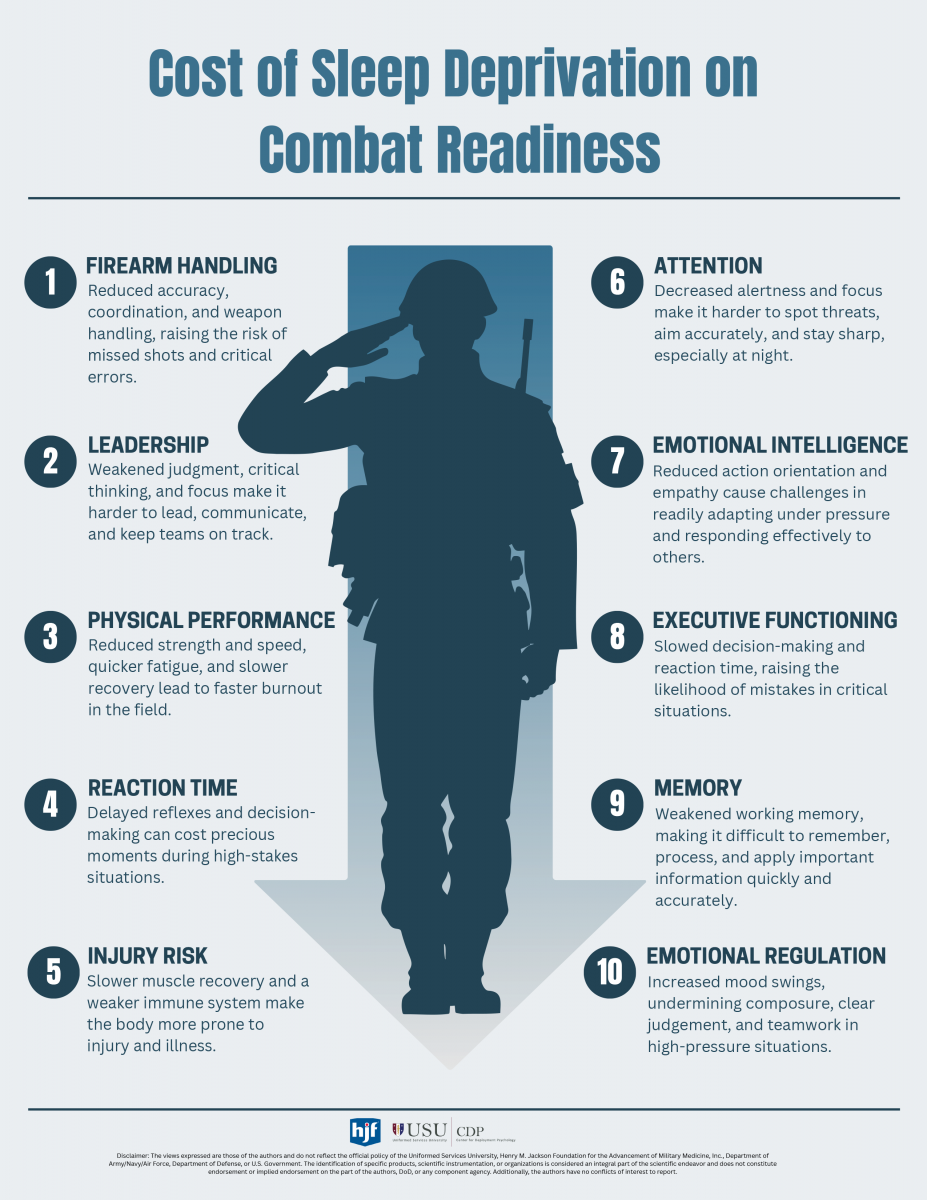 The report defines sleep deprivation as “inadequate sleep that negatively impacts a service member’s military effectiveness, evidenced by a reduced ability to execute complex cognitive tasks, communicate effectively, quickly make appropriate decisions, maintain vigilance, and sustain a level of alertness required to carry out assigned duties” (Department of Defense, 2021). A recent review by Rodden et al. (2026) on the impact of sleep deprivation on combat readiness supports the DoD’s definition and created an infographic to summarize key findings from the literature (See figure 1). Prevalence estimates for sleep deprivation among service members were roughly twice as high compared to civilian populations, with 64% reporting getting less than seven hours of sleep per night.
The report notes multiple challenges to obtaining adequate sleep, often related to operational demands. It provides supporting evidence that sleep deprivation is significantly related to mental health conditions such as TBI, PTSD, depression, as well as suicide risk, with 23% of deployed service members screening positive for a mental health disorder when getting four or less hours of sleep per night (Department of Defense, 2021). To address these findings, the report made several recommendations, including adopting duty schedules that ensure eight hours of sleep, implementing sleep-related training for both service members and leadership, the importance of brief interventions, research focused on circadian rhythm issues, and establishing a clearinghouse for military sleep-related resources.
However, a Government Accountability Office (GAO) report in 2024 found that the DoD had no formal plans to implement or monitor the recommendations from that 2021 study. The GAO report noted that between 2015 and 2019, there were 489 reported instances of fatigued-driving related fatalities. Additionally, fatigue has contributed to hundreds of millions of dollars in damage to ships, vehicles, and aircraft (Government Accountability Office, 2024).
Citing the need to address military culture factors that negatively affect sleep and to improve the coordination of research and training, the GAO report serves as a call to action to convene a summit that focuses on addressing sleep and fatigue issues within the Department of War. The Uniformed Services University and its Center for Deployment Psychology, Consortium for Health and Military Performance, Center for the Study of Traumatic Stress, Department of Neurology and Rehabilitative Medicine, along with the Walter Reed Army Institute of Research, and United States Air Force are hosting a 2-day summit for researchers, policy makers, and other key stakeholders to address:
- Sleep and fatigue challenges in military operations
- The role of research in advancing sleep intel to support mission readiness
- Dissemination and implementation strategies to optimize sleep and fatigue management
For more information about the sleep summit, please contact dod-sleep-summit-ggg@usuhs.edu or visit https://sites.google.com/usuhs.edu/sleep-and-fatigue-management/home
The opinions in CDP Staff Perspective blogs are solely those of the author and do not necessarily reflect the opinion of the Uniformed Services University of the Health Science or the Department of Defense.
Timothy Rogers, Ph.D., is an Assistant Director of Online Training, Technology and Telehealth for the Center for Deployment Psychology (CDP) at the Uniformed Services University for the Health Sciences in Bethesda, Maryland.
References:
Department of Defense (2021). Study on the effects of sleep deprivation on the readiness of members of the Armed Forces.
https://assets.documentcloud.org/documents/20495233/study-on-effects-of-sleep- deprivation-on-readiness-of-members-of-the-armed-forces-final-report.pdf
Government Accountability Office. (2024) Military readiness: Comprehensive approach needed to address service member fatigue and mange related efforts. (Report No. GAO-24-105917). https://www.gao.gov/products/gao-24-105917
Rodden, J., Rogers, T., Dolan, D., & Paxton Willing, M. M. (2026). Sleep isn’t Optional, it’s
Operational: The biopsychosocial toll of sleep deprivation in the armed
forces [Manuscript accepted]. Military Medicine.
Staff Perspective: The Quiet Work of PCSing - How Rest and Connection Build Resilience In Military Families
March 4, 2026
 By Khristine Heflin, MSW, LCSW-C, LCSW, LICSW
I have served on the Military Child and Family Collaboratory, here at the Center for Deployment Psychology for almost four years now. A part of that work has been the valuable insights that I have gained from, providers, policy makers, advocates and families at our bi-annual convening events. One common theme is that our military families are often described as resilient, even as military youth face unique circumstances and navigate settings and situations marked by constant change. Hearing this theme repeated led me to look more closely at how resilience is supported and defined within military families.
Although there has not been a consensus on the definition of resilience, we can conclude that there are both individual factors and external circumstances that interplay to foster resilience (Skomorovsky & Dursun, 2022). Family resilience research emphasizes that risk and protective factors operate together and the balance of these factors influences a family's ability to be resilient (Sullivan et al., 2020). This framework also underscores how resilience can only fully be understood when providers consider the interaction between a family's stressors, strengths and access to resources (Sullivan et al., 2020).
To bring this framework to life, I want to share some reflections of a recent conversation with my cousin on what sustains her family’s resilience.
Before we get started can you please tell us a little about your family?
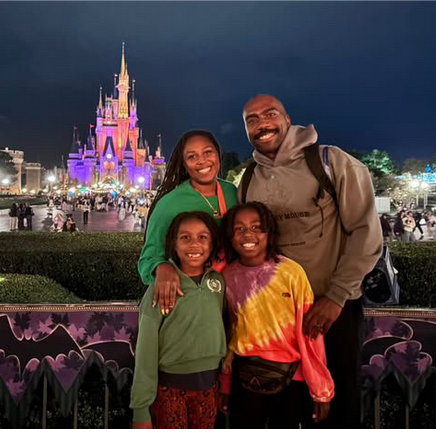 We are the Johnsons. Andrew is 39 and has served on active duty in the U.S. Air Force for 15 years, and I’m Liz, 36, his spouse. We’ve been married for 11 years and are raising two kids—Dylan, our 9-year-old soccer enthusiast, and Amaya, who is 7 and proudly claims the title of gymnastics queen, along with Jefe, our forever puppy, who is either 10 or 70 depending on how you count dog years.
Andrew and I met at his first duty station in Washington, D.C., and since then our family has completed six permanent changes of station and experienced two full deployments. Dylan has already lived through five PCS moves, Amaya four, and Jefe five, each move adding another chapter to our family’s military journey.
-When you think about the term resilience, what does it mean for you in your day-to day life and what is needed to ensure that families maintain resilience?
Definitely going with the flow and having to be okay with it. With Andrew being active duty, every so often, he’ll get his call-to-duty email and that’s when everything shifts gears with the quickness. When Andrew leaves, I try my best to keep our schedule the same or I may have to add more guidelines to our schedule. My saying for when he’s gone is “we’re all on the same team, we need to 'play' in harmony so that we can make this work”. I try to make sure the kids don’t miss out on their activities and maintain a sense of normalcy. Sometimes, I feel like I’m overcompensating to fill the absence of dad.
It sounds like flexibility is an important component of your family’s ability to maintain resilience. I know your family recently PCS’d. Can you tell us a little about that? How has military life such as deployments, trainings, frequent moves, or changes in routine impacted your family’s sense of connection, adaptability or staying steady during change and what helps your family stay cohesive during these transitions?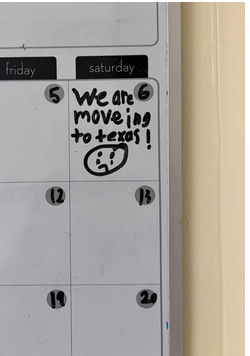 PSC-ing is very hard. This particular PSC came with a lot of anxiety for me and sadness for the kids. Andrew and I have open conversations about the upcoming PCS so we can prepare the kids and ourselves. I would schedule more playdates or try to squeeze in that last family vacation to make the idea of leaving less dreadful. We lived overseas and loved every minute of it. Living in Okinawa, I felt safe. My children got to be children (go outside and play without me standing feet away from them, walk alone, not have to worry about active shooters or even having to participate in the drills). I was able to let my guard down and feel human. Once we got the news we were coming back, I started to become stressed, stressed about money, the political climate and not having a job. For the kids, now that they’re older, they’ve expressed sadness because of them having to their friends, schools and teams.
We are a very tight knit family, Dylan and Amaya are each others best friends, they play extremely well together. I’ve had to have a lot of heart-to-hearts with them and remind them that they are always going to be there for each other no matter what. It’s funny to see how they are so different when they interact with their friends. Dylan is more reserved and will have maybe 1 or 2 solid buddies and then there Amaya, she had everyone and their family as a friend. Watching them say goodbye to their friends was hard for me. Amaya and her “besties” cried the whole day and hugged. Dylan gives a quick high-five and a “bye guys” and goes on about his business. Once we landed in the U.S. I saw the excitement and the calmness leave him and he became very sad for a few days. It took him a while to say the words “I’m sad” “I miss my life in Okinawa” “I want to go back”.
Because we PCS-ed during the holiday and the kids weren’t enrolled in school, our schedules were all out of whack, going to bed late, eating out, sleeping in. We talked about how this Christmas didn’t feel like Christmas. Typically right after Thanksgiving, we’re gearing up for Christmas, this year we were gearing up for a move. Dylan reminded me that this year we did not have our traditional movie nights or hot chocolate dance parties. Hearing that made me extremely sad because I am “Mother Christmas" and I feel like as a mom, it’s my duty to help create these traditions and memories.
It’s clear that a move can bring on both excitement and stress, can you share what helps your family maintain stability and a sense of belongingness?
I try my hardest to keep connections with our family members, cousins and friends to maintain normalcy and consistency for the kids. Thank God for technology, the kids have been able to chat or Facetime their friends and family whenever they want. I try to show them that they don’t have to forget anyone just because we aren’t physically close to them.
What supports, resources, or change within schools, health care, or military systems would support greater resiliency for you and your family?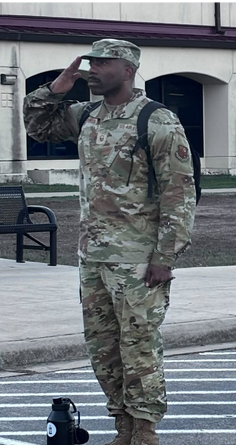 The process of transferring schools might have be the most nerve wracking for me. During our most recent move, the school we were transferring to needed all of these reports and forms that the kids' current school was not able to give to us until the semester finished, which was bringing us too close for comfort. Having the kids transition right into school was a big goal for me, so that they didn’t have such a big break in their routine, but in true PCS fashion, things just didn’t go as planned. I wish the military would allow/pay for one family member to travel with us during a PCS. This would take a lot off of our minds when we are trying to do our last minute packing or bag check ins. This time around, when we arrived in San Antonio, we had eight large totes, three big suitcases two kids and one dog with a very large travel crate. Having to wrangle everything up, and not have it in the way of the other travelers and keep the kids put, was very hard, especially when we had to walk the entire airport to go to retrieve a rental. Thank God I ran into a longtime friend in the baggage claim, he was willing to sit with our bags and the kids while we got our rental. If we had someone already there with us, we would have gotten out of that airport a lot quicker. Another option might be to have a sponsor ready and waiting for us with a large vehicle to pick us up from the airport and drive us to the hotel. In Okinawa, we drive on the opposite side of the road and car. Coming back and having to immediately remembering how to drive in a state where the minimum speed limit is 80 MPH and it was night (I don’t do well with night driving) was scary. I was terrified, and I kept it 100% honest with my kids, mom was scared. So we drove in silence to help me concentrate. We have a good laugh about it now, but if we could have something like a shuttle service, that would alleviate a lot of stress and added anxiety.
Why are periods of rest or stability important for your family’s resilience?
This PCS we had a longer period of rest because of the holidays, which for the kids was great, for me, I was burnt out with “Mommmmmm” “Can you charge my ipad?” “Where’s my chargerrrrrr?” “Can I have a snaaaackkkk?”. I think by 12/31 the kids were ready to go back to school and I definitely started that countdown lol. I do, however, like having those moments of rest because it gives us an opportunity to sit with our feelings, good or bad and recalibrate.
Military families and youth experience various risk factors that contribute to challenges, including deployments, reintegration following deployment and frequent moves but their outcomes are shaped not only by these challenges (Sullian et al., 2020). Protective factors like family cohesion, access to resources and support and connection to community serve as a buffer against negative outcomes and contribute to resilience (Sullian et al., 2020).
These experiences of the Johnson family show the work of resilience emerges through the steady and often forgotten moments of connection, flexibility and rest. Sustaining families means not only acknowledging the demands of military life but fostering an environment that promotes coordinated systems of support and opportunities for families to connect, rest and reset.
The opinions in CDP Staff Perspective blogs are solely those of the author and do not necessarily reflect the opinion of the Uniformed Services University of the Health Science or the Department of Defense.
Khristine Heflin, MSW, LCSW-C, LCSW, LICSW, is a licensed Clinical Social Worker and has been practicing since 2006. Currently, she serves as a Military Child Social Worker with the Center for Deployment Psychology (CDP) at the Uniformed Services University of the Health Sciences located in Bethesda, MD.
References:
Skomorovsky, A., & Dursun, S. (2022). Introduction: Resilience in military families. Military Behavioral Health, 10(2), 71–73. https://doi.org/10.1080/21635781.2022.2098886
Sullivan, K. S., Hawkins, S. A., Gilreath, T. D., & Castro, C. A. (2021). Mental health outcomes associated with risk and resilience among military-connected youth. Family Process, 60(2), 507–522. https://doi.org/10.1111/famp.12596
Staff Perspective: Micro-Resilience – Small Daily Habits That Strengthen Mental Wellness
February 4, 2026
 By
By In military culture, resilience is often framed as endurance — pushing through, carrying on, not slowing down. Strength is measured by how much stress an individual can shoulder without falling apart.
However, stress can become chronic through prolonged work hours, unpredictable schedules, frequent changes, separations from support systems, or exposure to perceived or real threats that keep the nervous system activated for extended periods. This can lead to exhaustion, irritability, sleep disruption, poor communication, and emotional numbing, and eventually a shame spiral for not practicing better self-care. The real challenge is to create opportunities to downshift because the nervous system can better handle chronic stress when it also receives signals of safety and regulation.
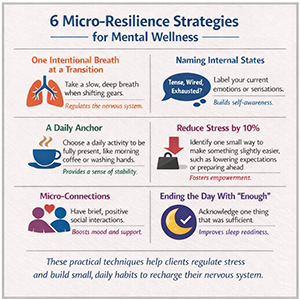
Resilience doesn’t require special equipment, extended time off, or perfect conditions — it needs to be practiced daily in small doses through repeatable habits that help the nervous system recover from stress. This is where micro-resilience becomes a clinical tool. Micro-resilience refers to brief, intentional actions that help regulate the stress response throughout the day. Individually, these actions may feel insignificant. Collectively, they create physiological conditions that support emotional regulation, cognitive flexibility, and relational capacity. Think of these strategies as a replenishment tool, like a protein shake after completing a challenging workout. Clients can create a routine that includes many mini-opportunities for recovery for their nervous system.
Framing resilience this way can help reduce all-or-nothing thinking and support clients who feel overwhelmed by traditional self-care recommendations. Clinically, micro-resilience aligns well with trauma-informed and strengths-based approaches.
Micro-resilience strategies are designed to be taught simply and adapted to each client’s individual experience. Providers may find it helpful to offer one or two at a time, and normalize experimenting rather than compliance. The graphic provides examples of six micro-resilience strategies to share with clients.
In families, micro-resilience can be framed as a shared practice, rather than an individual responsibility. This approach reduces pressure on any one family member to “hold it together.” Family-based examples, include:
- Consistent goodbye or reunion rituals
- Naming stress out loud
- One shared moment of calm
Micro-resilience reminds us, and our clients, that meaningful change doesn’t require ideal conditions. It only requires enough moments of safety, connection, and regulation to allow the nervous system to rest.
If you want to further explore the topic of micro-resilience, consider listening to this podcast episode with Bonnie St. John, co-author of Micro-Resilience: Minor Shifts for Major Boosts in Focus, Drive, and Energy, https://www.youtube.com/watch?v=fnMcNQ5mBhc.
The opinions in CDP Staff Perspective blogs are solely those of the author and do not necessarily reflect the opinion of the Uniformed Services University of the Health Science or the Department of Defense.
Annie Layden, LICSW, is a licensed clinical social worker working as a Military Behavioral Health Social Worker for the Center for Deployment Psychology at the Uniformed Services University of the Health Sciences in Bethesda, Maryland.
Staff Perspective: How Ready Do Military Families Need to Be?
January 28, 2026
By Drs. Jessica Strong and Elizabeth Burgin
Military families are ready. Military children are resilient.
These terms - “readiness” and “resilience” - are widely used as compliments, describing the strength, tenacity, and perseverance of military families to adapt and overcome the challenges of military life: family separations, frequent moves, and inherent dangers. And indeed, we celebrate the strength of these families.
But how ready do families need to be?
How resilient is enough?
Do families truly have to be Semper Paratus - always ready?
What does it mean to be “ready” or “resilient”?
This expectation and celebration of readiness and resilience is a dual-edged sword. While the sentiment behind the labels is good, their oversimplification has caused controversy. The core problem lies in the blurred, often contradictory, understanding of what it means to be truly ready for the military lifestyle.
First, let’s look at readiness.
The DoD has defined Family Readiness as:
“The state of being prepared to effectively navigate the challenges of daily living experienced in the unique context of military service” (DoD Instruction 1342.22).
This characterizes “readiness” firmly as a state, something that shifts with time and context. A more nuanced understanding of readiness recognizes that it is not just a state, but a cultivated state —a limited resource that we must actively support and replenish, like a basil plant. If you cultivate it and let it flourish with water, sunshine, and rich soil, you can continuously reap its rewards. You can make pesto today and still have leaves for margherita pizza next week. But if you strip all the leaves clean, or neglect to water it, the plant will not magically produce more leaves on demand. When you know it is finite, but replenishable, you use it more sparingly and be intentional about nurturing it when it’s under stress.
The military family's capacity for readiness is like that basil plant. It requires continuous, systemic nourishment to sustain its strength against the constant, compounding demands of military life.
Now, let’s look at resilience.
Resilience is commonly conceptualized as the ability to bounce back from stress, like a rubber ball. The rubber ball has the inherent ability to bounce back, because of its nature. No matter how often or how hard it is thrown, it will bounce back because it is made to do so.
This definition characterizes resilience as a trait - something a person has or does not have. Defined this way, military family members either have the ability to be resilient, or they fall short. When the system operates under the trait assumption—the label can become a weapon that denies struggling families the necessary aid.
Military spouse and author Jennifer Barnhill highlights this danger, noting that “Military resilience has been reduced to a verbal pat on the back for military families to earn—a label that is awarded, not a skill they develop” (Barnhill, 2025).
This praise feeds the dangerous "superhero" narrative, which gives drowning families a high five instead of a hand up. Being labeled "resilient" can actively block access to care. Barnhill describes an instance in which a spouse navigating serious medical care for their children was denied case management support because they "appeared resilient" and didn’t seem to need the resource.
In these cases, praise without practical support isn't just hollow; it becomes pressure to endure silently. It does real harm; spouses go without health care, including mental health care, for fear of appearing “weak” or not living up to the expectation of resilience. This damages the whole family, as we know the parents’ mental health is one of the best predictors of a child’s wellbeing (Briggs et al., 2020).
Furthermore, labeling families as inherently resilient glosses over the modifiable stressors that required resilience in the first place. It shifts the focus to individual coping skills instead of policies, resources, and sustainable support that could help carry the load.
After rigorously examining how family resilience is defined in the academic literature, Meadows and colleagues concluded: “Readiness is a state and/or condition that focuses on the resources individuals have before experiencing stress, whereas resilience is a process that focuses on the outcome of experiencing stress” (Meadows et al., 2015). They suggest that a definition of resilience should include the following themes: “a process, successfully overcoming adversity or obstacles, being strengthened by an experience, and having resources and utilizing these resources effectively” (Meadows et al., 2015) and further suggest adopting the following definition or family resilience:
“Family resilience can be defined as the ability of a family to respond positively to an adverse situation and emerge from the situation feeling strengthened, more resourceful, and more confident than its prior state.” (Simon et al., 2005).
This definition recognizes that military families can grow stronger through successfully navigating the unique and cumulative stressors of military service, but they require resources and support.
Military family readiness is a context-dependent, cultivated state that must be supported and nurtured.
Military family resilience is a process by which families may recover from adversity and emerge stronger, but it requires the provision or development of resources.
In either case, to conceptualize either readiness or resilience as a trait that families either have or don’t have is problematic and can cause real harm.
It is simply impossible for any human unit to be truly ready at all times and resilient in all circumstances. Striving for constant preparedness and immediate recovery from cumulative stressors is unsustainable and unrealistic. The military family, especially without the benefit of traditional civilian systems of support (extended family, stable employment, local networks), is not a self-contained unit capable of adapting to every stressor at any time with no external support.
True readiness or resilience are not about always bouncing back or being ready for anything at any time, and depend on creating and maintaining sustainable systems of support, not individual grit and bootstraps.
Developing these sustainable systems of support is not the sole responsibility of military families - though they have a big role! It is also not solely the responsibility of the military system. This fabric of support should include strands from families, military systems, and the larger civilian community and society. We need to shift from a demand for military families to be superheroes and instead build stronger, more adaptable support systems that match the magnitude of their sacrifice.
We can start by using the right language.
References:
Barnhill, J. (2025). The military stories you’ve been told and the ones you need to hear. E.P. House.
Briggs, E. C., Fairbank, J. A., Tunno, A. M., Lee, R. C., Corry, N. H., Pflieger, J. C., Stander, V. A., & Murphy, R. A. (2020). Military life stressors, family communication and satisfaction: Associations with children’s psychosocial outcomes. Journal of Child & Adolescent Trauma, 13(1), 75–87. https://doi.org/10.1007/s40653-019-00259-z
McInerney, S.A., Waldrep, E., and Benight, C.C. (2022). Resilience enhancing programs in the U.S. military: An exploration of theory and applied practice. Military Psychology. 36(3). 241-252. doi.org/10.1080/08995605.2022.2086418
Simon, J., Murphy, J., and Smith, S. (2005). “Understanding and fostering family resilience,” The Family Journal, 13, 2005, 427–436.
Staff Perspective: Crafting Calm - Why Video Games Can Be a Healthy Coping Skill
January 21, 2026
 By Brian Ludden, Ed.D., LMHC, LPC
I remember being a kid, maybe nine or ten years old, rushing to my best friend’s house after school to play Mario Kart on his Nintendo. We would spend hours racing around 16-bit rainbow tracks, smashing blocks, and throwing bananas. I didn’t realize then that gaming could be more than entertainment, or that for some people it could one day become a healthy way to cope with stress.
For years, I’ve been drawn to survival, crafting, and adventure-style games. Think Minecraft, Conan Exiles, Valheim, or Enshrouded, to name a few. In these games, players gather resources, build shelters, craft tools, and shape the world around them. What I’ve always appreciated is that many of these games allow creativity without urgency. There is often no pressure to perform, no constant combat or repeated restarts after dying, and no demand to move quickly. Instead, there is space to explore, discover, and build at your own pace. For me, that slower rhythm is calming, relaxing, and restorative, rather than the stress that is often associated with gaming.
So it caught my attention when, during a recent therapy session, my client asked, “Is playing video games a good coping skill, or am I just avoiding my issues?”
The client, a woman in her mid-60s, has been struggling with significant anxiety, stress, and worry related to a number of all-encompassing life circumstances. Throughout our time together, we have been working to build coping skills that support the deeper and sometimes difficult work we are doing in session. Recently, she began playing Valheim with her adult son, who lives across the country. It has become a meaningful way for them to connect, but as she noted, it has also served as a powerful distraction from her worries.
Valheim is an open-world survival and crafting game set in a Viking-inspired landscape. Players explore a vast environment with few limits, gathering resources, building homes and settlements, and progressing through the game at their own pace, either solo or cooperatively with others online.
Her concern that gaming might be more avoidance than coping is not unfounded. Healthy distraction, unfortunately, has developed a poor reputation in many therapeutic spaces. Historically, a number of therapeutic models emphasized emotional processing and direct engagement with distress, often cautioning that anything pulling a client away from “doing the work” could be counterproductive.
There has long been a belief that growth requires sitting with distress and acclimating to it. While that approach can be helpful for some, not every person responds well to sustained emotional exposure, especially when their nervous system is already overwhelmed.
The concern that distraction equals avoidance is understandable, but it misses something important. Healthy distraction is not about permanently avoiding unpleasant or distressing feelings. It is about creating enough space for the brain and body to recover from the physical and emotional impacts of stress. When someone is chronically overstressed, their nervous system struggles to self-regulate. Insight narrows, problem-solving becomes harder, and overall well-being declines.
In these moments, healthy distraction can allow anxiety to settle, reduce reactivity, and restore balance. From that regulated place, people often return to their challenges with clearer thinking, renewed motivation, and greater resilience.
Relief is not the enemy of growth. Sometimes, when you are stressed, overwhelmed, and struggling to make sense of the world around you, you don’t need more effort or insight. You may simply need a brief visit to another world, one that allows you to rest, reset, and return.
So the next time you find yourself, or a client you support, feeling overwhelmed and dysregulated, consider stepping into a new world for a while. Harvest a few resources, build something meaningful, and allow yourself time to rest and reset. You might be surprised to find that when you return, the challenges you left behind feel a little more manageable.
If you are curious about where to start, I often recommend Enshrouded as an excellent entry point for those seeking a relaxing gaming experience. It is, by far, my personal favorite. Its emphasis on exploration, building, and creativity allows players to engage at their own pace. There are countless tutorials and creative design videos on YouTube for those who enjoy learning by watching or who simply want a bit of inspiration. It is a great option for exploring whether this kind of play feels restorative for you or the clients you support. You can visit enshrouded.com to learn more about the game, or take some time to explore the other games mentioned here and see which ones spark your curiosity.
The opinions in CDP Staff Perspective blogs are solely those of the author and do not necessarily reflect the opinion of the Uniformed Services University of the Health Science or the Department of Defense.
Brian Ludden, Ed.D., LMHC, LPC, , is a Military Behavioral Health Counselor at the Center for Deployment Psychology (CDP) within the Uniformed Services University of the Health Sciences in Bethesda, Maryland.
Staff Perspective: Imposter vs. God Complex - What Does “Professional Confidence” Actually Mean?
January 14, 2026
 By
By 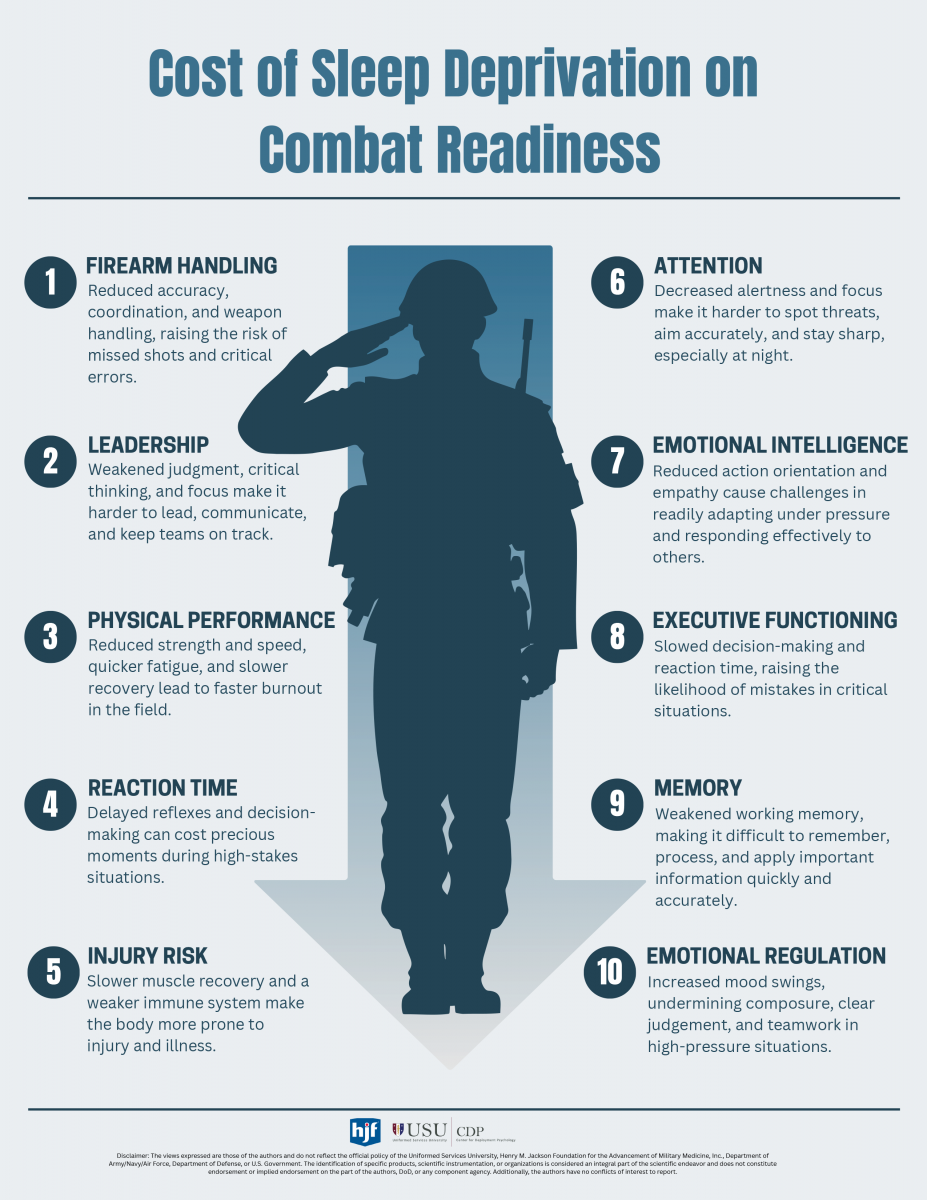
Lately, I have found myself speaking a lot with new professionals in our field, all of whom had anxiety about not knowing what to do and experiencing big-time imposter syndrome. It has made me reminisce about my own beginnings and the anxiety I felt being new, looking forward to the day I would feel confident with my cases. I hate to tell all of you new professionals this, but the idea that professional confidence is knowing exactly what to do all the time is an absolute myth.
What is professional confidence made of? How do you get it? Is it knowing how to treat each patient you encounter, or is it something else? The belief that at some point during your training or early years you will suddenly know exactly what you are doing is seriously unhelpful pressure. This idea inevitably causes panic when people realize that they still don’t know what to do with different patients. “I don’t know what I’m doing!” “I’m an imposter!” You can insert any similar statement here and they all ultimately do the same thing – kill our professional self-esteem and confidence. How can you be professionally confident if you don’t “know what you are doing”? How can you develop confidence otherwise? To answer these questions we have to explore what professional confidence really involves.
Is professional confidence achieved by making sure you do treatments “by the book” so you are following an evidence-based path? That does result in you being confident in the evidence base behind the treatment. However, I cannot honestly think of the last time I had an evidence-based treatment go perfectly and without my having to figure out how to adapt it in some way to make it work for the more unusual cases I tend to get. We also know that even when we can follow a specific protocol with absolute fidelity, we still don’t know what the patient will do – if they too will be absolutely faithful to it, how they will apply the learned skills, or what their end results will be.
Does professional confidence mean having lots of different treatment protocols in your toolkit that you can select from? That way, you have something to pull out at the appropriate time. That is part of it, but not all. Variety in your training and the treatment protocols you know does mean you are more likely to have something to apply to your patient. You still have to figure out how to shape that protocol to fit the person sitting in front of you, and that is where things can get dicey. Flexibility in therapy is crucial to meet our patients’ needs. This is where the artwork comes in, and there isn’t a manual for that.
If you can’t know how to treat everything, can you be professionally confident if you simply focus on a specialty area, meaning you only take specific patients and can apply the same tools? This would mean that you become more expert with those treatments and how to apply them to fit your patient’s needs. People who specialize are absolutely more expert in their concentration area than people who remain generalists. But even specialists find many times when they don’t know what to do with a specific case. Does this mean they simply aren’t expert enough yet, and if they continue their study they will gain this confidence? Probably not, because there will always be times when their expertise doesn’t perfectly fit with the presenting patient.
I worked daily with behavioral health interns for many years and continue to work with them intermittently to this day. What I have observed is that for most new professionals, they think being professionally confident means one of the things I’ve already mentioned – being skilled enough treating patients that you know how to treat whatever case presents itself. “I know what I’m doing” equates to knowing a specific treatment plan and knowing you can follow through with it successfully by the time the patient leaves their first appointment. They feel that admitting to not knowing what to do with a patient is some kind of failure as a professional.
In my humble opinion, the bottom line is this: the day you know exactly what you are doing, you need to get out of the profession because you then have a god complex. Feeling confident in this field isn’t always knowing what to do. It is knowing you can figure it out. And that doesn’t have to be in a single session. Do you know the basics – how to check for safety, explain limits of confidentiality, and get enough background information to have a good idea of the presenting problem and the start of a case conceptualization? Are you able to be an active and empathic listener, establish rapport, and ensure the patient feels heard by you? In other words, can you do the very basics that go into every encounter? If the answers are “yes” to these, then I think you indeed know what you are doing overall.
As for knowing the various treatment protocols to address different diagnostic issues, those are things we can consult about, read up on, and get further training for. There will always be times when I am at the end of a session and have no clue what to do next. But I can assure my patient we will figure it out together to get them on the path toward recovery, whatever that might look like for them. That is what professional confidence looks like. I’m not a god. I don’t know everything and I never will, especially when it comes to the immense variety in our patients. There will always be cases that challenge me and treatments I’m not yet sure about. That is what keeps me striving as a professional – not knowing it all, but having the confidence I can learn more and figure it out.
The opinions in CDP Staff Perspective blogs are solely those of the author and do not necessarily reflect the opinion of the Uniformed Services University of the Health Science or the Department of Defense.
Debra Nofziger, Psy.D., is a Senior Military Behavioral Health Psychologist and certified Cognitive Processing Therapy Trainer with the Center for Deployment Psychology (CDP) at the Uniformed Services University of the Health Sciences in Bethesda, Maryland.