
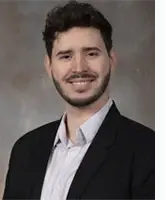
 By Justin Tash, MSW
“I Must Not Fear. Fear Is The Mind Killer.”
To anyone who has even a passing interest in the genre of science fiction, these words likely ring a bell. They are the opening lines of the Litany Against Fear from American author Frank Herbert’s 1965 sci-fi masterpiece DUNE. This book is, to this day, the best-selling science fiction novel, with well over 20 million copies sold worldwide. The saga has influenced everything from Star Wars to Avatar, offering readers a sprawling universe of political intrigue, ecological philosophy, and deeply human struggle. However, beneath the sandworms, spice, and shifting dunes of Arrakis, lies something far more grounded: a remarkably accurate portrait of what trauma does to children.
I have had this fact proven to me again and again as a social worker who works with adolescents and military families. Unfortunately, many of my clients have faced difficult situations that individuals their age should never have to go through. But, the power of human storytelling teaches us about what is happening internally for all of us and our clients. Even though trauma affects everyone differently, by examining these incredible worlds and characters, we can take away important, universal lessons.
Paul Atreides and the Burden of the Parentified Child
When Paul Atreides, the main character in many ways of DUNE, is introduced, he is a teenager who has already begun to carry weight no adolescent should bear. The fall of his Great House and the death of his father, the Duke, strips away his childhood overnight. These events thrust him into a leadership role among the planet's indigenous population, the Fremen, molding him into a de facto father figure for an entire people.
Clinicians can easily recognize this dynamic because they are often faced with young clients who are being subjected to a similar situation, although not usually on such a grand scale. When a family experiences a loss, or abuse that leads to absence of one parent in some way, the child can become the caretaker or the protector and thus shoulder the responsibility and expectations of holding it all together.
Children who experience early loss or abuse frequently develop what we call "parentification." They learn to read the emotional temperature of a room, suppress their own needs, and derive their sense of worth from how well they manage the people around them. Paul believes, with complete sincerity, that he is destined for greatness and uniquely equipped to bear this burden that has been thrust on him. This is not an uncommon reaction or complex to develop for trauma victims, especially young victims. Trauma has an insidious way of convincing the victim that they are capable of handling something that will ultimately cause intense harm. The gap that is created between that perceived resilience and a person’s actual capacity is one of trauma’s most dangerous distortions.
Alia of the Knife and Memories Out of Order
Paul's sister Alia presents an even more striking clinical metaphor. Born later in the story with the full ancestral memory of every generation before her, she enters the world already saturated with experiences she did not live, has no context for, and cannot process in any developmentally appropriate sequence.
This is, in an extreme and fantastical form, what trauma does to the brain. Trauma packages memories incorrectly. Traumatic events are stored as present threats rather than being filed as past experiences due to how the amygdala interrupts the regular memory processing that occurs between the frontal cortex, hippocampus, and cerebellum. These memories are often intrusive, disorganized, and stripped of context. Much of trauma-focused therapy is about carefully pulling those neural pathways apart and rebuilding them in a safer, more coherent order, in an environment where the body finally understands it is no longer in danger. It turns out fear truly is the mind killer.
What Adolescents (and these Children of Dune) Keep Teaching Me
One of the most important lessons I have learned from my work with adolescents is that trauma affects every child differently. After all, the adolescent brain is still actively developing, still redistributing and consolidating information across its architecture. In many cases, that neurological flexibility allows young people to process difficult experiences before they calcify into symptomatic patterns. They moved through something hard before the brain had the context to commit to storing the experience as a wound. Due to this, there is no guaranteed response to these experiences, there is not even a guarantee that PTSD will manifest. I consistently encounter young people who have experienced events that meet the clinical definition of trauma but do not develop any symptoms.
Children and adolescents are often seemingly unbothered by experiences we assume must be devastating because they are seeing all of this for the first time. Paul nor Alia responded to their experiences as if they were traumatic, although, objectively, they very much were. Frequently, it is the fear, the alarm, and the urgency in the reactions of the adults around them that teaches a child that what happened was catastrophic. Confusion and fear are often learned responses and not inherent ones.
Voices from an Outer World
Paul “Muad’Dib” Atreides and his sister Alia, however fictional they may be, are excellent, microcosmic examples of childhood trauma and adverse childhood experiences. These masterful characterizations can offer an up-close-and-personal perspective on what it means to exist as a young person who has experienced trauma. Impactful clinical lessons like these can be found in unlikely places, even from outer worlds like DUNE, but if we as providers listen to these voices, we can gain access to a deeper understanding of the human condition that no textbook could ever hope to provide.
The opinions in CDP Staff Perspective blogs are solely those of the author and do not necessarily reflect the opinion of the Uniformed Services University of the Health Science or the Department of War.
Justin Tash, MSW, is a Military Behavioral Health Social Worker at the Consortium for Defense Psychology (CDP) at the Uniformed Services University for the Health Sciences in Bethesda, Maryland and the Project Lead/Instructor and for the Prevention of Harmful Behaviors in the Military Project. Mr. Tash completed his Bachelor of Arts in Communications at Texas A&M University in 2015 and his Masters of Social Work at the University of South Florida in 2025. He is now working toward the goal of becoming a Licensed Clinical Social Worker (LCSW).